Getting enough iron from plant foods
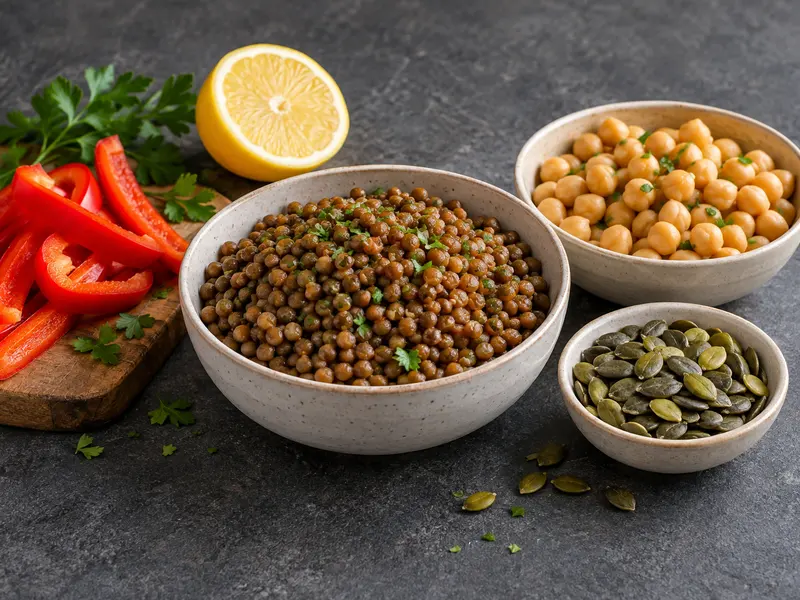
A vegan diet can supply iron through legumes, tofu, seeds, grains and fortified foods. Because most is non-haem iron, absorption varies with the meal and the body's iron status; vitamin C foods can help. Menstrual blood loss and other risk factors also matter. Suspected deficiency needs assessment, and an iron supplement should not be treated as an automatic requirement of vegan eating. [1][2][3][5]
Count iron foods, then consider absorption
Beans, lentils, tofu, seeds and fortified cereals can provide iron on a vegan diet. Their iron is mainly non-haem iron, which is also written nonheme. Animal flesh contains haem iron as well as non-haem iron. The body generally absorbs haem iron more readily, while the absorption of non-haem iron responds more to other foods in a meal and to the body’s iron status. NIH’s iron fact sheet explains these differences.
This means two diets with the same listed milligrams may not provide the same amount of absorbed iron. It also means that an individual food’s absorption percentage cannot be treated as a fixed property of everyone who eats it. Food combinations, iron stores and health conditions matter.
Use ordinary portions of iron foods throughout the day. A bowl of lentils contributes more than a decorative spoonful; a fortified breakfast cereal should be counted using the amount on its own label. Leafy vegetables can contribute, but they need not carry the whole plan.
Understand the reference intake
US and Canadian reference tables list 8 mg/day for adult men and 18 mg/day for women aged 19–50, then 8 mg/day for women aged 51 and older. These are dietary planning values for healthy adults. The higher value reflects menstrual losses; HealthLink BC notes that people who still menstruate after 50 may continue to need the younger adult amount. Heavy bleeding deserves individual assessment.
The Health Canada mineral table states that iron requirements for vegetarians are 1.8 times the mixed-diet values because of lower assumed bioavailability. This is a dietary planning allowance. It is not a direction to take an iron tablet containing 1.8 times a label’s daily value.
The adjustment does not predict an individual’s absorbed intake precisely. A varied diet containing vitamin C differs from a restricted diet based largely on foods that inhibit absorption. Blood loss and iron stores also vary. Keep the higher planning allowance in mind without using it to diagnose deficiency from a food record.
Compare portions you would eat
These approximate examples come from HealthLink BC’s food table. Its cup is 250 mL. Generic values and fortified products vary, so use package information when available.
| Vegan food | Defined edible portion | Approximate iron |
|---|---|---|
| Cooked soybeans | 175 mL, about 3/4 cup | 6.5 mg |
| Cooked beans or lentils | 175 mL, about 3/4 cup | 3.3–4.9 mg |
| Firm tofu or cooked edamame | 150 g | 2.4 mg |
| Chickpeas | 175 mL, about 3/4 cup | 2.2 mg |
| Tahini | 30 mL, 2 tablespoons | 2.3 mg |
| Cooked quinoa | 125 mL, 1/2 cup | 1.5 mg |
A lentil bowl with a full 175 mL portion of lentils makes a different contribution from a soup containing that amount divided among four people. Count the portion served. Cooking water also changes weight, so grams of dried lentils cannot be substituted directly for the same grams of cooked lentils.
Fortification can make cereals and other foods useful sources, but products are not interchangeable. Read the milligrams and serving size. A high iron amount on a label describes the iron present, not an assurance that the whole amount is absorbed.
Add vitamin C to the meal
Vitamin C improves non-haem iron absorption. Pair a substantial iron food with peppers, broccoli, citrus, berries or another vitamin C food. HealthLink BC describes this food combination. It can be an ordinary part of a meal:
| Iron-containing meal | A vitamin C food to include |
|---|---|
| Lentil and rice bowl | Chopped red pepper or broccoli |
| Chickpea sandwich | Cabbage slaw with lemon dressing |
| Tofu stir-fry | Bell peppers |
| Fortified cereal | Berries or an orange alongside |
These are meal ideas, not measured absorption experiments. The effect of vitamin C varies with the meal and the person’s iron status. There is no need to assign an exact absorption multiplier to a squeeze of lemon.
Chickpea spinach curry and smoky tofu black bean chili provide ways to put legumes and tofu into substantial meals. Their recipe cards define the portion and estimate nutrition. Do not assume every bowl supplies the amount in the table above.
Keep inhibitors in perspective
Phytate in whole grains and legumes can reduce non-haem iron absorption, and polyphenols in tea and coffee can also inhibit absorption around a meal. These effects do not make beans or whole grains foods to avoid. They remain useful sources of protein, fibre and minerals. NIH’s review also notes that findings from individual meals do not translate neatly into long-term iron status across a varied diet.
If low iron is a concern, having tea or coffee between meals instead of with the main iron-containing meal is one practical change. Avoid building an elaborate timing routine that makes eating harder. For prescribed supplements, follow the clinician’s or pharmacist’s instructions because a treatment plan may need more specific attention to interactions and tolerability.
Low stores and anemia are different findings
Ferritin is commonly used to assess iron stores. Hemoglobin measures a different part of the picture: a person can have depleted stores before anemia develops. Ferritin can also rise with inflammation, making a seemingly normal result harder to interpret. The British Society of Gastroenterology guideline explains why symptoms, blood counts and iron studies need to be considered together.
Observational comparisons often find lower iron stores in vegetarians, particularly among women. A review of adult iron-status studies found substantial variation in both low ferritin and anemia. Studies used different definitions and included different forms of vegetarian eating, so a single prevalence figure would be a poor prediction for an individual vegan.
Lower stores are not automatically a benefit, and eating meat does not rule out deficiency. Diet labels cannot replace an assessment of the actual person, including blood loss and other causes.
Know when food advice is insufficient
People with heavy menstrual bleeding, frequent blood donation, endurance training, malabsorption or a very limited food intake may need a closer review. HealthLink BC identifies these circumstances. Persistent fatigue or reduced exercise tolerance deserves assessment rather than a self-diagnosis from diet alone.
If deficiency is confirmed, its cause matters. Blood loss or an absorption problem should not be attributed to vegan eating without investigation. Food improvements can accompany treatment, but should not delay clinically indicated iron replacement or assessment of the underlying cause.
Do not start high-dose iron simply because a diet is vegan. Excess iron can be harmful, and supplements can cause gastrointestinal symptoms and interact with medicines. Check whether a multivitamin already contains it. The supplement guide explains how to place iron within an overall plan; treatment dose, route and follow-up require professional guidance.
Sources and further reading
- NIH Office of Dietary Supplements. Iron: Fact Sheet for Health Professionals. National Institutes of Health; 2025.
- HealthLink BC. Iron and your health. HealthLinkBC File 68c; 2025.
- HealthLink BC. Iron in foods. HealthLinkBC File 68d; 2025.
- Health Canada. Dietary reference intakes tables: Reference values for elements. Canada.ca; 2025.
- Snook J, Bhala N, Beales ILP, et al.. British Society of Gastroenterology guidelines for the management of iron deficiency anaemia in adults. Gut; 2021. DOI: 10.1136/gutjnl-2021-325210.
- Pawlak R, Berger J, Hines I. Iron Status of Vegetarian Adults: A Review of Literature. American Journal of Lifestyle Medicine; 2018. DOI: 10.1177/1559827616682933.
Source: https://lentilogical.com/blog/plant-based-iron/
Related guides
Which supplements might a vegan diet need?
Review B12, vitamin D, iodine, calcium, iron, zinc and omega-3 with a practical guide to food gaps, supplement labels and professional advice.
How much protein do you need on a plant-based diet?
Calculate adult protein needs, compare realistic vegan portions, and learn how age, training and protein quality can change the planning.
Eating plant-based on a budget
Plan affordable plant-based meals with a realistic US and Canadian grocery example, including package costs, edible yields and convenience tradeoffs.