How much protein do you need on a plant-based diet?
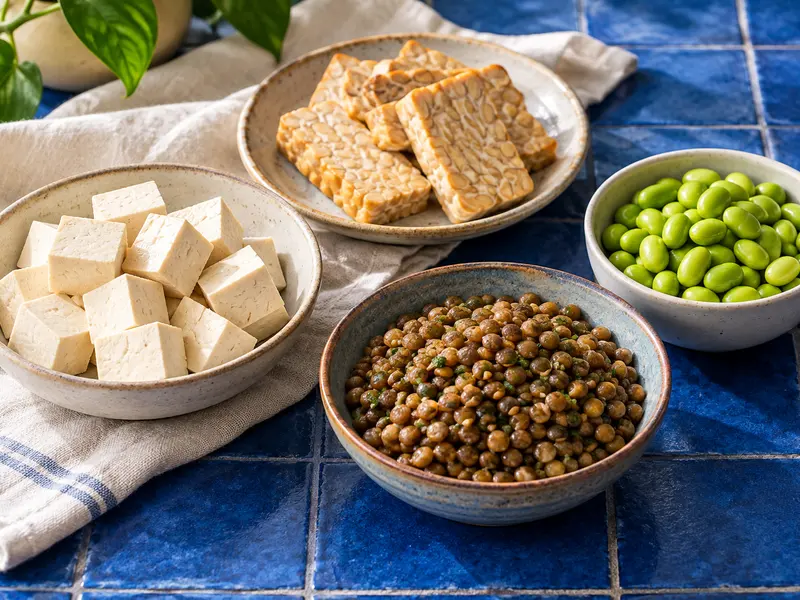
Most healthy adults can meet protein needs on a vegan diet with regular portions of legumes, soy foods, nuts, seeds and grains. The US and Canadian adult RDA is 0.8 grams per kilogram of body weight per day, but older adults and people training to build muscle may benefit from higher intakes. Start with the relevant target, then check the portions you usually eat. [1][2][5][6]
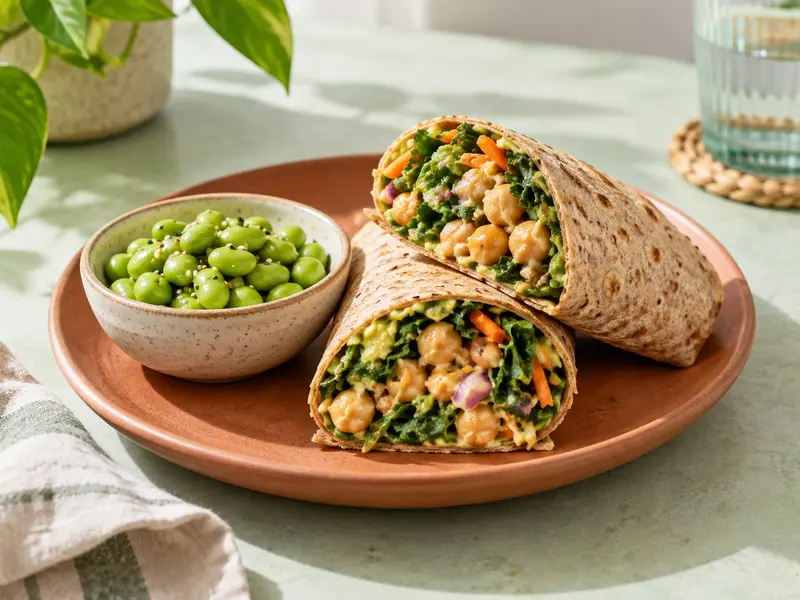
Start with a body-weight calculation
For healthy adults, the US and Canadian Recommended Dietary Allowance for protein is 0.8 grams per kilogram of body weight per day. An RDA is an intake intended to cover nearly all healthy people in a group. It is not the average requirement, and it was not designed as a target for maximizing muscle growth. Health Canada’s reference table lists an adult Estimated Average Requirement of 0.66 g/kg and an RDA of 0.80 g/kg.
To estimate the RDA in grams, divide weight in pounds by 2.2, then multiply kilograms by 0.8. The calculation looks like this:
| Adult body weight | Protein at 0.8 g/kg/day |
|---|---|
| 60 kg, about 132 lb | 48 g |
| 75 kg, about 165 lb | 60 g |
| 90 kg, about 198 lb | 72 g |
These are examples, not individualized prescriptions. Illness, substantial weight changes, athletic training and some medical conditions can make a simple weight calculation less useful. A dietitian can help choose an appropriate target when those circumstances apply.
The number covers protein from the whole day. Bread, oats and vegetables contribute alongside the beans, tofu and other foods that provide larger amounts. Counting only the item at the centre of dinner will underestimate intake.
A vegan diet needs deliberate protein foods
Removing meat, dairy and eggs does not automatically leave a protein gap. What replaces them matters. Lentil soup, a tofu stir-fry and peanut butter on whole-grain toast contribute protein in different amounts. A dinner made from vegetables and a small portion of rice may need a substantial addition of beans or soy foods.
In the North American Adventist Health Study-2, average reported protein intake was broadly adequate across dietary groups, including the group described as strict vegetarian. This was an observational food-intake survey, not a test proving that every vegan diet is adequate. Participants’ diets varied, and questionnaire estimates have error. Rizzo and colleagues’ study supports the feasibility of meeting needs while leaving room for individual shortfalls.
Several days of ordinary eating are more informative than one carefully assembled day. Include a workday, a day with fewer cooking opportunities and the amounts you actually serve. Check packages when a product is central to the calculation. A splash of soy beverage in coffee and a full glass are very different portions.
Protein quality describes amino acids and digestion
Protein supplies amino acids. Nine are essential because the body cannot make enough of them. Foods differ in their proportions of these amino acids and in how readily their protein is digested. This is why equal grams of different proteins are not identical in every physiological experiment.
The familiar division into complete and incomplete plant proteins is less useful for planning a varied diet. Grains tend to supply relatively less lysine; legumes supply more. Eating both over the day helps provide a suitable mixture. There is no need to match beans and rice at every meal. Mariotti and Gardner’s review explains why amino acid deficiency concerns have often been overstated for varied adult vegetarian diets, while identifying more restrictive diets as a concern.
That does not make protein quality irrelevant. A diet relying heavily on bread, fruit and a little nut butter has fewer dependable protein choices than one that regularly includes lentils, chickpeas, tofu, tempeh or edamame. Seitan can supply substantial protein, but its wheat protein is relatively low in lysine; legumes remain useful elsewhere in the day.
There is no separate official US or Canadian protein RDA for vegans. A universal percentage increase for every vegan would hide the differences between a varied diet and a restricted one. With a low food intake, limited food choices or a demanding training goal, review both the amount and sources of protein.
Use portions that resemble a meal
These approximate values come from HealthLink BC’s food table. Its cup measures are Canadian, with one cup equal to 250 mL. Product labels can differ substantially, especially for tofu and plant beverages.
| Vegan food | Defined portion | Approximate protein |
|---|---|---|
| Cooked beans, peas or lentils | 175 mL, about 3/4 cup | 12 g |
| Cooked tempeh | 150 g | 27 g |
| Firm or medium-firm tofu | 150 g | 12 g |
| Fortified soy beverage | 250 mL | 7 g |
| Peanut butter | 30 mL, 2 tablespoons | 7 g |
| Bread | One 35 g slice | 4 g |
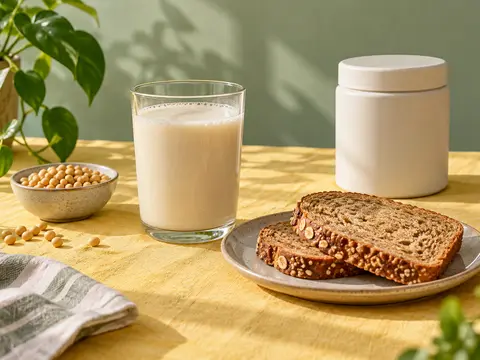
Using those estimates, two slices of toast with two tablespoons of peanut butter and a glass of soy beverage provide about 22 g. A bowl containing 175 mL of cooked lentils and 250 mL of cooked rice provides about 18 g before vegetables. These are arithmetic examples, not nutritionally complete menus or measurements of a finished recipe.
A second spoonful of dressing adds little protein unless it contains a substantial amount of a protein food. The same is true of a scattering of seeds. Use garnishes for flavour and texture; choose a measured portion of beans, lentils or tofu when the meal needs more protein.
Peanut banana overnight oats and smoky tofu black bean chili show ways to build those foods into meals. Their recipe cards define their own servings and nutrition estimates; the examples above are separate calculations.
Age and activity can change the target
The formal adult RDA stays at 0.8 g/kg with age, but some professional groups recommend more for older adults. The PROT-AGE Study Group recommends roughly 1.0–1.2 g/kg/day for healthy older people, with needs varying during illness and exercise. That is an expert recommendation about supporting muscle and function, rather than a change to the official RDA.
Older adults may also eat smaller meals. Replacing an animal food with vegetables alone can reduce protein and energy at the same time. A recent trial of a self-selected vegan diet in older adults reported reductions in protein intake and muscle measures; resistance exercise mitigated the adverse muscle effects. Participants received dietary advice, monthly dietitian meetings and some supplied foods, but chose their own diets; protein and energy were not matched between groups. The findings warrant monitoring actual protein and food intake even when advice is available. They do not establish the outcome of every vegan eating pattern.
Resistance training creates another reason to consider a higher intake. In a meta-analysis of protein supplementation and training, an exploratory analysis estimated a plateau near 1.6 g/kg/day for gains in fat-free mass, with a wide confidence interval. This was not a vegan-specific requirement or a precise threshold for each person. The muscle-building guide explains how to use training evidence without turning it into a universal daily quota.
Check food intake before buying powder
Protein powder can help when appetite, convenience or a higher training target makes food alone difficult. It is optional. Compare the protein in a defined serving, the ingredient list and the cost; a scoop size is not standardized. Choose a vegan product, since whey and casein come from milk.
A powder also cannot replace the other planning a vegan diet requires. Getting plenty of protein does not establish that vitamin B12, calcium, iodine or vitamin D intake is adequate. Keep those questions separate, starting with a reliable vitamin B12 source.
If protein intake looks low, make one concrete meal change and recalculate: use a full portion of lentils in a soup, add tofu to noodles, or replace a low-protein plant drink with soy beverage if it suits your preferences and allergies. That makes the effect on the day’s intake visible.
Sources and further reading
- Health Canada. Dietary reference intakes tables: Reference values for macronutrients. Canada.ca; 2025.
- HealthLink BC. Protein and your health. HealthLinkBC File 68o; 2025.
- Rizzo NS, Jaceldo-Siegl K, Sabaté J, Fraser GE. Nutrient Profiles of Vegetarian and Nonvegetarian Dietary Patterns. Journal of the Academy of Nutrition and Dietetics; 2013. DOI: 10.1016/j.jand.2013.06.349.
- Mariotti F, Gardner CD. Dietary Protein and Amino Acids in Vegetarian Diets—A Review. Nutrients; 2019. DOI: 10.3390/nu11112661.
- Bauer J, Biolo G, Cederholm T, et al.. Evidence-based recommendations for optimal dietary protein intake in older people: a position paper from the PROT-AGE Study Group. Journal of the American Medical Directors Association; 2013.
- Morton RW, Murphy KT, McKellar SR, et al.. A systematic review, meta-analysis and meta-regression of the effect of protein supplementation on resistance training-induced gains in muscle mass and strength in healthy adults. British Journal of Sports Medicine; 2018. DOI: 10.1136/bjsports-2017-097608.
- Domić J, Grootswagers P, Pinckaers PJM, Melchers M, van Loon LJC, de Groot LCPGM. A self-selected vegan diet reduces skeletal muscle mass in healthy older adults: a randomized controlled trial. American Journal of Clinical Nutrition; 2026. DOI: 10.1016/j.ajcnut.2026.101416.
Source: https://lentilogical.com/blog/plant-based-protein-needs/
Related guides
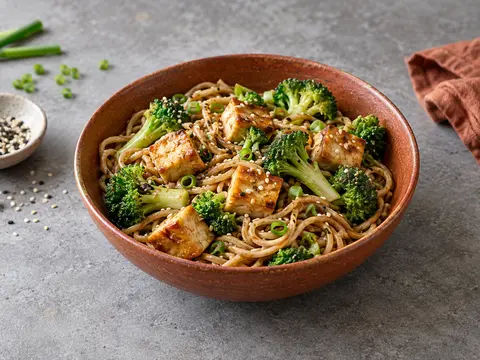
Building muscle with plant-based meals
Plan vegan protein meals for resistance training, understand protein-source comparisons, and see where the muscle-building evidence remains limited.
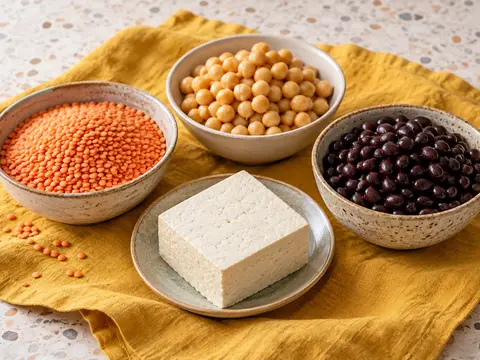
Affordable plant proteins compared
Compare lentils, beans, tofu and other vegan proteins by portion cost and cost per 25 grams of protein, using separate US and Canadian estimates.
Vitamin B12 on a vegan diet
Find reliable vegan B12 sources, read fortified-food labels, and understand how dietary needs, preventive supplement schedules and treatment differ.