Which supplements might a vegan diet need?
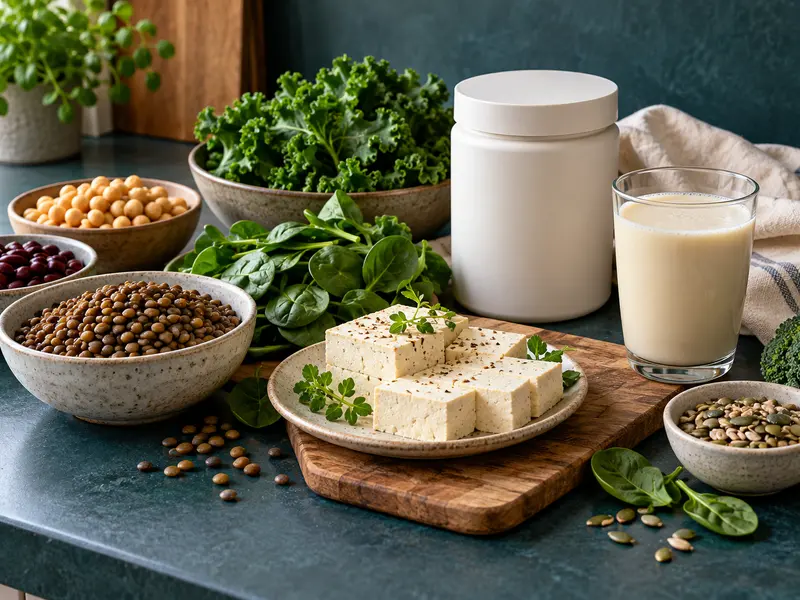
Vitamin B12 needs a reliable plan on a vegan diet. Vitamin D and iodine also deserve an explicit source check, while calcium, iron, zinc and omega-3 decisions depend on food intake and individual circumstances. Supplements can fill a defined gap; they should not be treated as proof that a diet is adequate. Dietary requirements, preventive supplements and deficiency treatment are different kinds of advice. [1][2][3][4][5][6][7]
Start with the gap you are trying to fill
A supplement decision is easier when it answers a specific question: which nutrient, what is missing, and how will the product help? A large collection of bottles does not establish that a diet is adequate. A short list may be enough when food and fortification already cover most needs.
First distinguish three jobs. A dietary reference intake describes an amount for healthy people. A preventive supplement helps cover an expected gap. Treatment addresses a diagnosed deficiency or another clinical indication and may use different amounts, forms and monitoring. This guide concerns routine planning for nonpregnant, nonlactating adults aged 19 and older; pregnancy, breastfeeding and younger ages need separate guidance. Treatment belongs with a clinician.
List foods and drinks eaten regularly before buying a product. Include fortified beverages and cereals, the actual amount in each serving, and supplements already taken. A combination product may duplicate nutrients in a separate tablet without adding anything useful.
Use this decision guide
| Nutrient | First question to check | Where a supplement may fit |
|---|---|---|
| Vitamin B12 | Is there a reliable fortified-food or supplement routine? | A dependable source is essential on a vegan diet; tablets can simplify the routine |
| Vitamin D | Is there a daily source, and what does local guidance recommend? | Food intake, age and other circumstances can support routine supplementation |
| Iodine | Are iodized salt or explicitly iodine-fortified foods used? | A measured source may be needed when those foods are absent |
| Calcium | Do regular food portions reach the age-appropriate intake? | A supplement can fill a remaining food gap |
| Iron | Is there a risk factor, symptom or documented low status? | Assessment should guide use rather than a default vegan iron tablet |
| Zinc | Are legumes, soy foods, nuts, seeds and grains eaten regularly? | Limited food intake or an identified shortfall may justify review |
| Omega-3 | Is there an ALA source, and is direct EPA/DHA wanted or indicated? | Algae oil supplies long-chain omega-3, a different question from meeting ALA needs |
These decisions can overlap, but they are not interchangeable. Calcium fortification does not tell you whether the same beverage contains B12 or iodine. A product with several nutrients still needs to be checked one nutrient at a time.
B12 needs a dependable routine
Unfortified plant foods are not a reliable B12 supply. Fortified foods and supplements are the practical sources, according to the NIH Office of Dietary Supplements. Make this decision when starting a vegan diet, rather than waiting for symptoms.
Choose a schedule that matches the product and appropriate guidance. A daily small dose and a much larger weekly dose cannot be compared simply by dividing the weekly amount by seven, because absorption depends on dose. A multivitamin may contribute, but its name does not guarantee an adequate amount or frequency.
The B12 guide explains intake requirements, prevention examples, fortified-food labels and situations needing clinical assessment. Do not use a prevention schedule to treat suspected deficiency.
Vitamin D guidance depends partly on where you live
Vitamin D can be difficult to obtain from an unfortified vegan diet. Look for it on fortified plant beverages and other labelled foods. Being outdoors does not provide a dependable dietary calculation because season, latitude, skin exposure and other factors affect production.
Health Canada advises adults aged 51 and older to take a daily supplement containing 400 IU, or 10 mcg. For younger adults, it advises a daily vitamin D food source or that supplement amount. This is a public-health supplement recommendation, separate from the total dietary requirement and from deficiency treatment.
Check that the product is vegan. Vitamin D2 and vegan sources of D3 are available; a D3 label alone does not identify its origin. NIH describes the supplement sources. The calcium and vitamin D guide covers total intake, fortification and why routinely taking more is not automatically beneficial.
Iodine is easy to overlook
Adults generally need 150 mcg of iodine per day in US and Canadian reference guidance. Plant foods have variable amounts, and a vegan diet removes several common sources. The NIH iodine fact sheet identifies vegans and people who do not use iodized salt as groups at risk of inadequate intake.
Check the salt label: sea salt, kosher salt and specialty salts are not necessarily iodized. Most plant beverages also cannot be assumed to contain iodine. An iodine source should be explicit on the product information.
If salt use is low or restricted, increasing salt is not the solution to every iodine gap. A dietitian or pharmacist can help identify a measured source within the overall plan. Kelp is a poor substitute for a predictable amount because seaweed iodine varies greatly and can be excessive. People with thyroid conditions should review supplements with their clinician.
Calcium supplements can fill a food gap
Review regular portions of calcium-fortified beverages, calcium-set tofu and other calcium foods. Do the calculation before choosing a supplement. Someone already getting enough from food does not gain a reason to add a large calcium tablet simply by being vegan.
The NIH calcium guidance distinguishes total intake needs from supplement amounts and discusses excessive intake and interactions. A supplement contributes to the daily total; it does not sit outside that calculation. Some multivitamins contain relatively little calcium, so check the actual amount.
Use the detailed food and label guide to compare portions. If food falls short, a pharmacist or dietitian can help select an amount and form suited to the gap and any medicines being taken.
Iron should follow risk and assessment
Iron supplements are not a routine requirement for every vegan. Menstrual blood loss, frequent blood donation, low intake and absorption problems can increase concern. The NIH iron fact sheet describes both inadequate intake and the risks of excess.
Iron deficiency can occur before anemia develops. Fatigue or a restrictive diet alone cannot tell you the cause. If deficiency is suspected, a clinician can assess blood counts, iron stores and possible blood loss or malabsorption. A food plan supports treatment, but should not delay needed care.
Keep high-dose iron out of a routine shopping list unless there is an appropriate indication. Check whether a multivitamin already contains iron. The plant-based iron guide explains food sources and absorption without prescribing a deficiency-treatment dose.
Zinc deserves food planning
The adult zinc RDA is 11 mg for men and 8 mg for women. Beans, tofu, nuts, seeds and whole grains contribute, although phytate in plant foods reduces absorption. A narrow diet with little of these foods warrants a review before assuming intake is sufficient. NIH’s zinc guidance describes these differences.
Soaking beans, using leavened bread and eating a variety of protein foods are practical food choices. They do not allow a precise prediction of how much zinc an individual absorbs.
A large zinc dose is not a harmless way to cover uncertainty. The adult upper limit is 40 mg per day from food and supplements; sustained high supplement intake can impair copper absorption. Clinical treatment can differ from this limit, but requires appropriate supervision. Check cold remedies and other combination products as well as any daily multivitamin.
ALA and algae oil answer different questions
Flaxseed, chia, walnuts and some vegetable oils supply alpha-linolenic acid, or ALA. US and Canadian adequate intakes are 1.6 g/day for adult men and 1.1 g/day for adult women. These are ALA values, not recommended amounts of an oil capsule.
The body can convert ALA to EPA and DHA, but conversion is limited and variable. Algae-derived oil provides EPA and/or DHA directly. The NIH omega-3 fact sheet notes that the US reference system has not established a separate general intake recommendation for EPA or DHA.
That leaves a different decision from B12: there is not an identical universal supplement rule. Consider the food pattern, life circumstances and any clinical indication. On a label, compare the named amounts of DHA and EPA, not just the total weight of algae oil. The omega-3 guide explains the evidence and uncertainty in more detail.
Choose a product with clear contents
Read the serving size, nutrient amount, directions and other ingredients. Check for gelatin in capsules or gummies and for animal-derived ingredients. A vegan designation does not establish an appropriate dose or the strength of a health claim.
In the US, dietary supplements generally are not approved by the FDA for safety and effectiveness before sale. Independent quality testing can provide information about contents or contaminants, but a quality seal is not proof that the product will improve health. NIH’s consumer guide explains these distinctions.
In Canada, look for an eight-digit Natural Product Number, or NPN, and check the authorized product information. Health Canada’s product licensing guidance explains what the licence represents. It does not determine whether a particular adult needs the nutrient.
Keep a single list of fortified foods, supplements and doses to review with a pharmacist or clinician. Include combination products and occasional remedies. A small, explicit plan is easier to assess and maintain than repeated purchases made in response to broad deficiency warnings.
Sources and further reading
- NIH Office of Dietary Supplements. Vitamin B12: Fact Sheet for Health Professionals. National Institutes of Health; 2025.
- Health Canada. Vitamin D. Canada.ca; 2022.
- NIH Office of Dietary Supplements. Iodine: Fact Sheet for Health Professionals. National Institutes of Health; 2024.
- NIH Office of Dietary Supplements. Calcium: Fact Sheet for Health Professionals. National Institutes of Health; 2026.
- NIH Office of Dietary Supplements. Iron: Fact Sheet for Health Professionals. National Institutes of Health; 2025.
- NIH Office of Dietary Supplements. Zinc: Fact Sheet for Health Professionals. National Institutes of Health; 2026.
- NIH Office of Dietary Supplements. Omega-3 Fatty Acids: Fact Sheet for Health Professionals. National Institutes of Health; 2025.
- NIH Office of Dietary Supplements. Dietary Supplements: What You Need to Know. National Institutes of Health; 2023.
- Health Canada. Product Licensing. Canada.ca; 2017.
- NIH Office of Dietary Supplements. Vitamin D: Fact Sheet for Health Professionals. National Institutes of Health; n.d.
Source: https://lentilogical.com/blog/vegan-supplements/
Related guides
Vitamin B12 on a vegan diet
Find reliable vegan B12 sources, read fortified-food labels, and understand how dietary needs, preventive supplement schedules and treatment differ.
Calcium and vitamin D without dairy
Find vegan calcium and vitamin D sources, compare fortified-food labels and portions, and understand when supplements may fill a gap.
Getting enough iron from plant foods
Compare vegan iron foods and portions, use vitamin C to support absorption, and learn why low iron stores or symptoms need assessment.
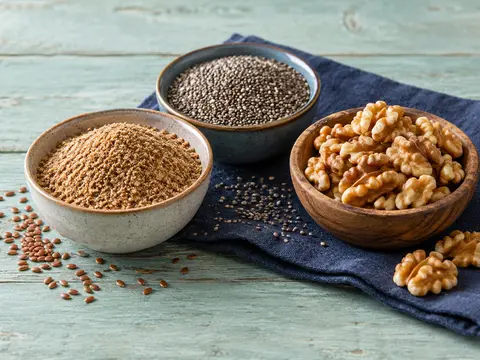
Omega-3 on a vegan diet: seeds and algae
Learn how ALA from seeds differs from EPA and DHA, what algae supplements can do, and why higher omega-3 blood levels do not prove disease prevention.