Affordable plant proteins compared
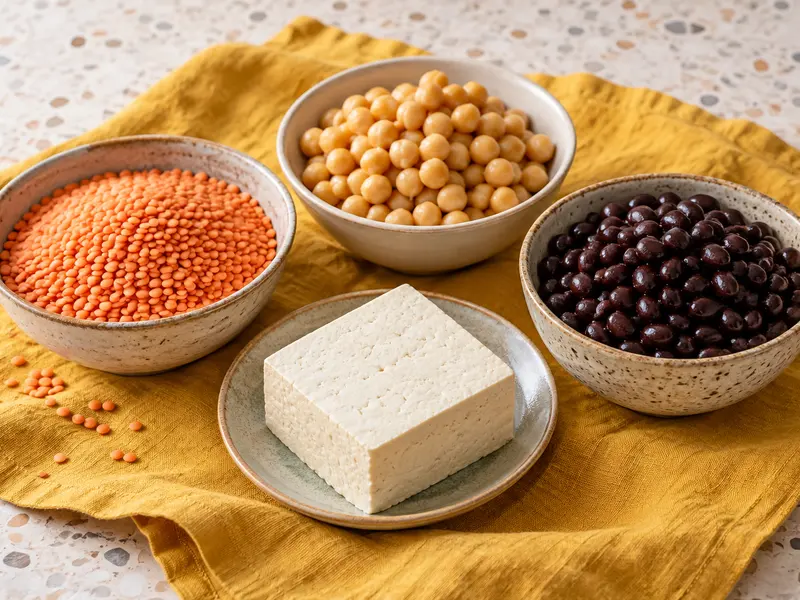
Dry lentils are among the least expensive protein sources in our US and Canadian reference prices. Beans, tofu, soy milk, tempeh, edamame and peanut butter offer different tradeoffs in preparation, portion size and energy. Compare the amount you would eat as well as the cost of 25 grams of protein. Dry and cooked weights, drained liquid, brand differences and the full package price all affect the result. [2][3][5][6]
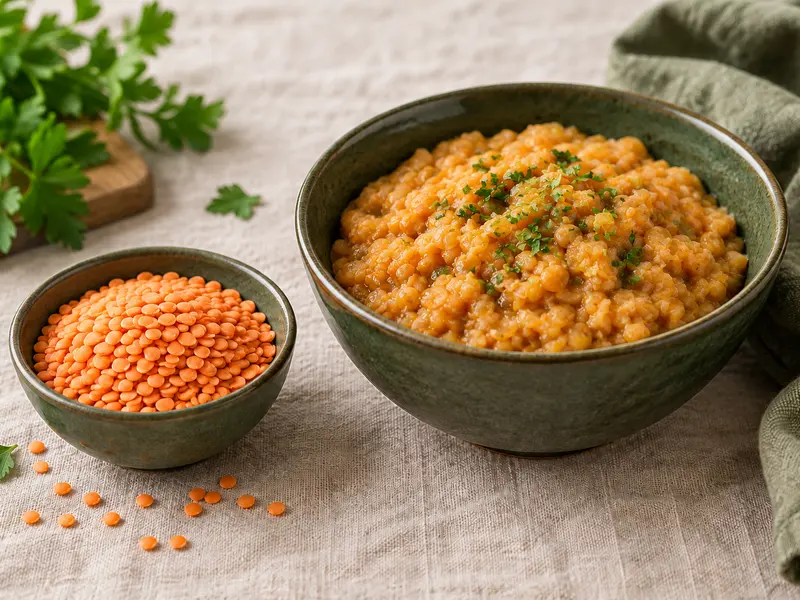
Use the same amount of protein for one comparison
A bag of lentils, a block of tofu and a jar of peanut butter have different package sizes and protein concentrations. Comparing their sticker prices does not reveal the cost of the protein you will eat.
The table below uses 25 grams of protein as a common comparison unit. This is not a recommended amount for every meal, a daily requirement or a serving-size instruction. The protein-needs guide explains requirements; this article compares food costs.
For each food, the calculation divides 25 grams by the protein per gram of that food, then prices the resulting amount. Calories are calculated for that same amount. LentiLogical’s methodology describes the underlying use of food-state-specific nutrition and usable package quantities.
Estimated costs for 25 grams of protein
US and Canadian prices come from independent existing retailer source records. They are separate market estimates rather than a currency conversion. Nutrition uses the particular reference label or USDA food listed below; it does not claim that every regional price proxy has identical nutrition.
| Food and weighing state | Amount providing 25 g protein | Estimated kcal | US dollars | Canadian dollars |
|---|---|---|---|---|
| Red lentils (dry) | 104.2 g | 396 | 0.50 | 0.34 |
| Brown lentils (dry) | 113.6 g | 409 | 0.48 | 0.31 |
| Chickpeas (drained) | 320.5 g | 401 | 1.05 | 1.34 |
| Black beans (drained) | 305.6 g | 397 | 0.99 | 1.22 |
| Firm tofu (drained, before pressing) | 236.1 g | 250 | 1.74 | 2.69 |
| Tempeh (as sold) | 116.7 g | 222 | 2.16 | 3.07 |
| Edamame (frozen, shelled) | 227.3 g | 318 | 1.95 | 2.19 |
| Unsweetened soy milk (liquid) | 750.0 mL, estimated | 281 | 1.81 | 1.78 |
| Peanut butter (as sold) | 100.0 g | 594 | 0.81 | 0.80 |
Dry lentils cost least per 25 grams of protein in these references. Peanut butter also looks inexpensive by that measure, but its 25-gram protein quantity supplies about 594 calories. Soy milk requires about 750 millilitres. These quantities illustrate why cost per protein is useful alongside ordinary portions, appetite and the rest of a meal.
This comparison includes the food itself. Seasonings, cooking oil, accompanying grains or vegetables, utilities, delivery, taxes and equipment are outside the figures. Actual labels and local prices can change the ranking.
Compare the portion you would actually use
A meal can contain several protein foods, with each supplying part of the total. The following are example weighing quantities, not nutritionally complete meals or prescribed servings.
| Food and weighing state | Example amount | Estimated protein | US dollars | Canadian dollars |
|---|---|---|---|---|
| Red lentils (dry) | 60 g | 14.4 g | 0.29 | 0.20 |
| Brown lentils (dry) | 60 g | 13.2 g | 0.25 | 0.16 |
| Chickpeas (drained) | 150 g | 11.7 g | 0.49 | 0.63 |
| Black beans (drained) | 150 g | 12.3 g | 0.48 | 0.60 |
| Firm tofu (drained, before pressing) | 150 g | 15.9 g | 1.10 | 1.71 |
| Tempeh (as sold) | 150 g | 32.1 g | 2.77 | 3.94 |
| Edamame (frozen, shelled) | 150 g | 16.5 g | 1.29 | 1.44 |
| Unsweetened soy milk (liquid) | 240 mL | 8.0 g | 0.58 | 0.57 |
| Peanut butter (as sold) | 30 g | 7.5 g | 0.24 | 0.24 |
For example, a 30-gram portion of peanut butter contributes about 7.5 grams of protein. The 100-gram quantity needed to reach the comparison’s 25 grams is a very different portion. Conversely, 150 grams of the reference tempeh supplies more than 25 grams. The comparison unit should not dictate how much of a food you enjoy or need.
When planning dinner, price the recipe’s actual combination of foods. A lentil dish can get additional protein from a grain or a spoonful of seeds, while tofu can join beans or noodles. The recipe estimate should include those ingredients rather than presenting the protein food’s cost as the price of the whole meal.
Dry, cooked and drained weights need different records
The lentil rows use dry-food nutrition and dry-food prices. Cook them before eating. They are not directly interchangeable with the same weight of cooked lentils, which includes absorbed water. No cooked yield was assumed for these calculations, so the table cannot tell you that a dry bag makes a fixed number of cooked cups.
The bean rows use cooked, drained nutrition. Their price estimates remove liquid using general USDA Food Buying Guide yields. The chickpea assumption is 9.6 ounces of drained beans per 15 ounces purchased; the black-bean assumption is 73 ounces drained per 109 ounces purchased. These are scaled reference yields, not measured results for the listed cans.
Canadian cans labelled in millilitres need an additional gross-contents mass estimate of one gram per millilitre before applying the drained yield. A package that states its drained weight gives you a better direct input for your own calculation. Do not count the full can’s liquid weight as beans.
Tofu here is weighed after draining packing water and before pressing. Pressing changes water content, making it unsuitable to combine a pressed weight with an unpressed nutrition value without adjustment. Edamame uses shelled frozen beans, excluding pods; cook it according to the package. Soy milk uses an estimated one gram per millilitre to connect its volume label with mass calculations.
The price and nutrition products are sometimes different
The tofu nutrition reference is Nasoya Extra Firm, but the Canadian price proxy is Sunrise Extra Firm. Their water content and protein concentration may differ. Similarly, a UK canned-chickpea label supplies the nutrition reference while prices come from US and Canadian cans. The estimates are transparent comparisons using documented references, not product-by-product laboratory measurements.
The soy-milk calculation uses the manufacturer’s Nutrition Facts panel, which differs from other prose on its product page. Peanut-butter, tempeh and edamame labels also describe specific formulations. Use the panel on the package in your hand when reproducing the calculation.
Some retailer observations include promotions, including a US peanut-butter rollback and a Canadian soy-drink sale. Some listings have a default store or were retrieved from a cached snapshot. Larger packages can reduce a calculated portion cost while requiring a higher payment now. These limits are reasons to recalculate locally, not to add an assumed national average.
Check the arithmetic with your own packages
Use the package’s protein figure and its matching serving weight. If it lists protein per serving, first divide protein grams by serving grams. Divide 25 by that result to find the food amount for this comparison. Then multiply that amount by package price divided by the usable package amount. Keep all figures unrounded until the final money display.
For a usual portion, multiply its weight by the same protein-per-gram and price-per-gram figures. Match dry with dry and drained with drained throughout. Product labels are rounded, so the result remains an estimate even when the arithmetic is exact.
Cost per protein also leaves out fibre, calcium, iron, sodium and other nutritional differences. A low result does not establish overall diet quality. Soy foods and health discusses the foods behind several rows, and the budget guide shows how a selection fits a broader grocery example.
Primary inputs for the comparison
The linked nutrition records and regional price listings identify the inputs used above. They may describe different brands. Observation dates, package normalization and full-precision calculations are retained in LentiLogical’s private source records.
- Red lentils: nutrition, US price, Canadian price.
- Brown lentils: nutrition, US price, Canadian price.
- Chickpeas: nutrition, US price, Canadian price.
- Black beans: nutrition, US price, Canadian price.
- Firm tofu: nutrition, US price, Canadian price.
- Tempeh: nutrition, US price, Canadian price.
- Edamame: nutrition, US price, Canadian price.
- Unsweetened soy milk: nutrition, US price, Canadian price.
- Peanut butter: nutrition, US price, Canadian price.
Sources and further reading
- Bob's Red Mill Red Lentils. Red lentils: nutrition reference. Manufacturer, retailer or USDA source identified in record; n.d.
- Walmart US. Great Value Red Lentils, 1 lb / 454 g; dry: price reference. Walmart US; n.d.
- Walmart Canada. Great Value Red Lentils, 900 g: price reference. Walmart Canada; n.d.
- Bob's Red Mill Brown Lentils. Brown lentils: nutrition reference. Manufacturer, retailer or USDA source identified in record; n.d.
- Walmart US. Great Value Lentils, 1 lb; generic dry lentil price reference, cultivar not specified: price reference. Walmart US; n.d.
- Walmart Canada. Whole Brown Lentils, 1.8 kg / 4 lb; brand not captured: price reference. Walmart Canada; n.d.
- Tesco Chickpeas in Water. Chickpeas: nutrition reference. Manufacturer, retailer or USDA source identified in record; n.d.
- Walmart US. Great Value Garbanzos Chick Peas, 15.5 oz can: price reference. Walmart US; n.d.
- Walmart Canada. Great Value No Salt Chick Peas, 540 mL can: price reference. Walmart Canada; n.d.
- USDA SR Legacy: Beans. Black beans: nutrition reference. Manufacturer, retailer or USDA source identified in record; 2018.
- Walmart US. Great Value No Salt Added Black Beans, 15 oz can: price reference. Walmart US; n.d.
- Walmart Canada. Great Value Black Turtle Beans, 540 mL can: price reference. Walmart Canada; n.d.
- Nasoya Organic Extra Firm Tofu. Firm tofu: nutrition reference. Manufacturer, retailer or USDA source identified in record; n.d.
- Walmart US. Nasoya Extra Firm Organic Tofu, 14 oz; water-drained preparation reference: price reference. Walmart US; n.d.
- PriceSmart Foods. Sunrise Extra Firm Tofu, 350 g (non-organic; product number 00057864000080): price reference. PriceSmart Foods; n.d.
- Lightlife Original Tempeh. Tempeh: nutrition reference. Manufacturer, retailer or USDA source identified in record; n.d.
- Target US. Lightlife Original Tempeh, 8 oz: price reference. Target US; n.d.
- Walmart Canada. Lightlife Original Organic Plant-Based Tempeh, 227 g: price reference. Walmart Canada; n.d.
- H-E-B primary retailer Nutrition Facts for frozen shelled edamame: 2/3 cup (100 g) serving. All 8 fields explicitly reported; ingredients soybeans.. Edamame: nutrition reference. Manufacturer, retailer or USDA source identified in record; n.d.
- Walmart US. Seapoint Farms Edamame Shelled Soybeans, 12 oz: price reference. Walmart US; n.d.
- Walmart Canada. Natures Classic Young Edamame Shelled Soybean, 454 g: price reference. Walmart Canada; n.d.
- Silk Unsweet Soymilk US manufacturer Nutrition Facts panel per 240 mL: 90 kcal. Unsweetened soy milk: nutrition reference. Manufacturer, retailer or USDA source identified in record; n.d.
- Walmart US. Silk Unsweet Soymilk, 64 fl oz: price reference. Walmart US; n.d.
- Save-On-Foods. Silk Soy Milk Alternative Unsweetened, 1.89 L; observed sale listing: price reference. Save-On-Foods; n.d.
- Smucker's Natural Creamy Peanut Butter; peanuts and salt; label values per 32 g. Peanut butter: nutrition reference. Manufacturer, retailer or USDA source identified in record; n.d.
- Walmart US. Smucker's Natural Creamy Peanut Butter, 16 oz / 454 g; observed rollback price: price reference. Walmart US; n.d.
- Walmart Canada. Kraft Only Peanuts All Natural Smooth Peanut Butter, 750 g; unsalted equivalent price reference: price reference. Walmart Canada; n.d.
- US Department of Agriculture. Food Buying Guide: Meats and Meat Alternates, yield table. USDA Food and Nutrition Service; n.d.
Source: https://lentilogical.com/blog/cheap-plant-based-protein/
Related guides
Eating plant-based on a budget
Plan affordable plant-based meals with a realistic US and Canadian grocery example, including package costs, edible yields and convenience tradeoffs.
How much protein do you need on a plant-based diet?
Calculate adult protein needs, compare realistic vegan portions, and learn how age, training and protein quality can change the planning.
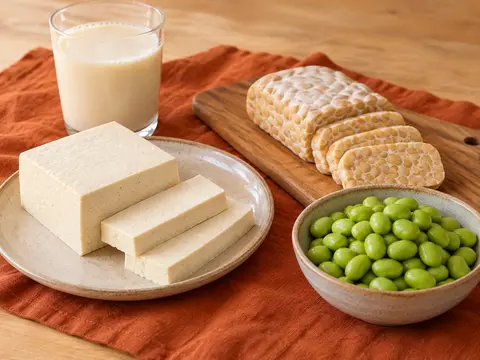
Soy foods and health: what human studies show
What tofu, tempeh and soy milk contribute to a vegan diet, with human evidence on cholesterol, hormones and thyroid concerns, plus supplement cautions.
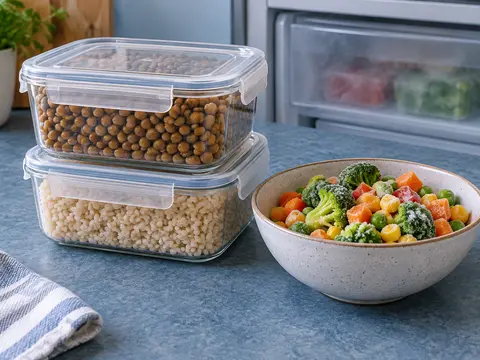
Save money with frozen food, pantry staples and less waste
Compare fresh, frozen and pantry foods by the amount you will use, with practical portioning, date-label and safe leftover advice for US and Canadian kitchens.