Save money with frozen food, pantry staples and less waste
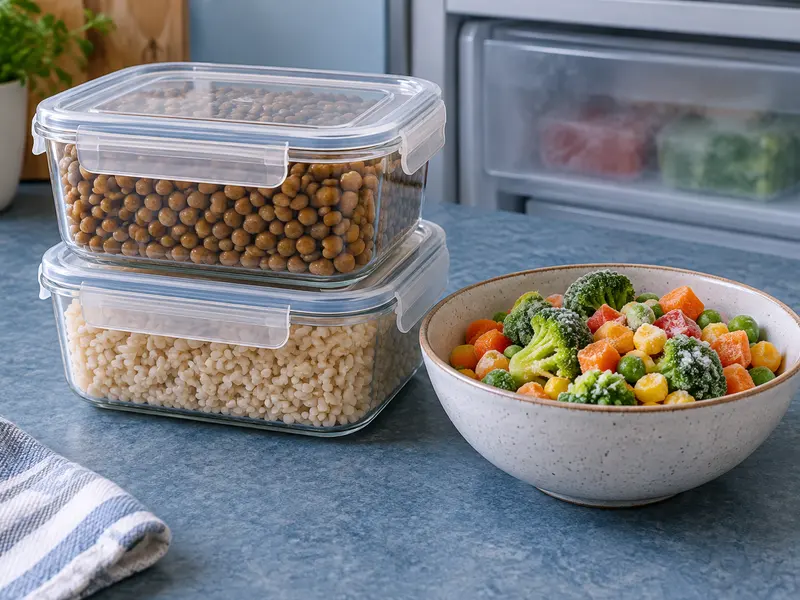
Frozen vegetables, canned beans and pantry staples can make plant-based meals easier to plan. Their value depends on the usable quantity, the amount you finish and the time they save you. Compare those factors with fresh food and bulk packages. Plan storage before cooking: cooling and freezing leftovers safely can help you use them, while a quality date alone does not tell you whether food is safe. [1][4][5][6][7]
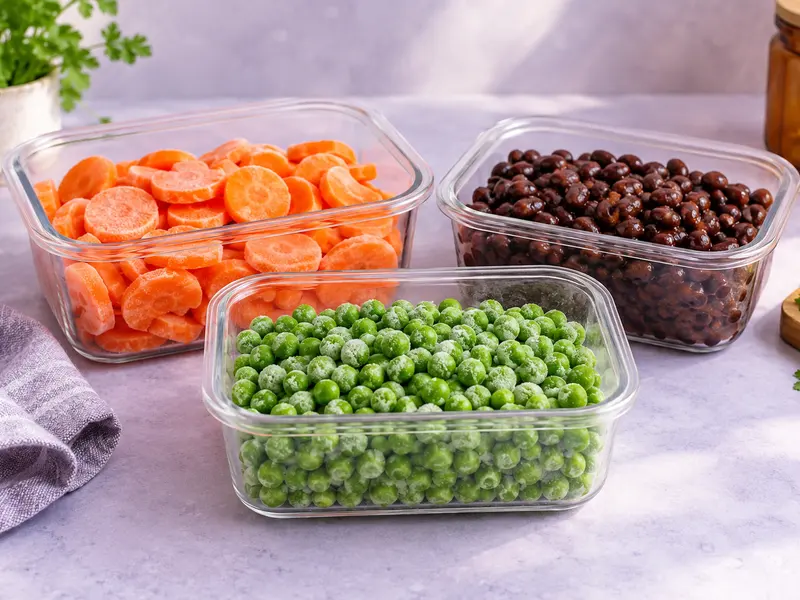
Compare food you will use, not just food you will buy
A large bag has a lower cost per gram only while those grams remain useful. If part spoils, the money paid for it still belongs to the food budget. The more useful comparison is package price divided by the edible quantity you expect to use.
For a simple illustration, suppose a package contains 1,000 edible grams, but you discard 200 grams. You ate 800 grams while paying for 1,000. The cost per gram eaten is 25% higher than it would have been if you used the whole package. This is arithmetic using a hypothetical waste amount, not a measured household saving or a prediction of what you will throw away.
Peel, cores, shells and packing liquid are another distinction. They reduce edible yield before spoilage enters the calculation. A bag of shelled edamame and a bag of pods should not be compared as if all of each package becomes dinner. Our cost methodology explains how usable quantities enter recipe estimates.
Choose the form that fits the next meal
Fresh, frozen and canned produce can all fit a healthy diet. Canada’s Food Guide recommends comparing prices and considering frozen or canned options, particularly when fresh produce is out of season. It also cautions against buying more than you need. Its budget guidance supports comparing the alternatives rather than treating one form as universally cheapest.
| Form | When it can be useful | What to check |
|---|---|---|
| Fresh | Salads, raw texture, or a specific ripe ingredient | Trimming, ripeness, intended use and how soon you can eat it |
| Plain frozen | Adding a small quantity to a cooked dish | Freezer space, package cooking instructions and added sauces |
| Canned | A quick bean meal or a shelf-stable vegetable option | Drained quantity, sodium, added sugar and storage after opening |
| Dry | A pantry staple you can cook in amounts that suit you | Cooking time, equipment, package size and dry-food weight |
The form can change the dish. Frozen spinach works differently from salad leaves, and canned tomatoes contribute liquid as well as solids. Choose a recipe that suits the ingredient instead of buying a replacement that will disappoint and remain unused.
USDA’s produce planning guidance includes fresh, canned and frozen choices. That does not mean every preparation has identical nutrients: check the actual label, including sauces, syrup and salt. A plain frozen vegetable and a vegetable in a rich sauce are different purchases.
Use the freezer to portion food
A resealable bag lets you take the amount needed for one meal and return the rest to the freezer. Keep it closed and follow package storage instructions. Portion cooked food before freezing so the quantity you thaw matches what you intend to eat.
Freezing does not turn a food into a ready-to-eat product or remove every food-safety hazard. Follow the cooking directions on frozen foods, including vegetables and edamame. A package that requires cooking still requires it when the food is going into a salad or a blended dish. FDA explains ready-to-cook foods.
Decide on freezer portions while cooking. If you already know you will not finish a pot within the safe refrigerated interval, freeze those extra portions promptly. Waiting until they have spent too long in the refrigerator does not make them safer to save.
If you have little freezer space, a few canned beans or smaller pantry packages may suit you better than a large frozen assortment. Cost advice that assumes extra appliances and storage is incomplete.
Keep a short list of food that needs using
Before shopping, look at the refrigerator, freezer and cupboard. Note the ingredients that already have a destination and the ones that need one. A visible container or shelf for food to use soon can make it easier to find.
Plan meals around overlapping ingredients. Cabbage left from a stir-fry can join a chickpea soup. A partly used can of tomatoes can become a small sauce, provided you store and use it within appropriate guidance. Bread you will not finish can be frozen in portions. These are possible uses, not reasons to keep food beyond a safe interval.
Keep the plan flexible enough to match your week. A second recipe requiring a long shopping list can cost more than using the ingredient in something familiar. Cabbage lentil skillet and vegetable peanut rice soup offer combinations to consider; follow their ingredients and preparation instructions rather than assuming every leftover works in any recipe.
Cool and store leftovers safely
USDA advises refrigerating leftovers at 40°F or below, using shallow containers to help them cool quickly, and eating refrigerated leftovers within three to four days. Food should not remain out for more than two hours, reduced to one hour when the surrounding temperature is above 90°F. USDA’s leftover guidance gives the details.
Health Canada’s general leftover guidance uses a two-to-three-day refrigerated interval and a refrigerator temperature of 4°C or colder. Follow the relevant local advice and any shorter product-specific instruction. For a simple plan serving both audiences, use refrigerated portions within two to three days and freeze additional portions earlier. Label containers with the food and the date prepared. Health Canada’s guidance covers cooling, thawing and reheating.
When reheating, Health Canada advises reaching 74°C/165°F and checking with a food thermometer. Stir microwaved food so it heats evenly. Cooked beans, rice, pasta and vegetables also need safe handling; a vegan meal is not exempt from refrigeration rules.
You cannot reliably identify unsafe food by smell or appearance. Discard food that has been left out too long or stored unsafely. Saving an ingredient is never a reason to ignore the storage instructions that make it usable.
Understand the date on the package
A US “Best if Used By” date generally describes quality. FDA discusses how confusion over quality dates can contribute to food waste. That guidance does not cancel refrigeration requirements, recalls or safety instructions. FDA’s food-waste advice explains the distinction.
In Canada, a best-before date describes the quality of an unopened, properly stored product. It does not guarantee safety, and the storage period can change once the package is open. Best-before and expiration dates are different terms. The Canadian Food Inspection Agency explains them.
A date label cannot rescue food that was mishandled before the date. Conversely, a quality date alone does not prove a shelf-stable food became unsafe overnight. Use product instructions and specific storage guidance when deciding what to keep.
Buy bulk only when it fits your use and cash budget
Compare the usable quantity, the likely amount eaten, and the full payment required. A larger pack may be economical for a staple you finish often; a smaller one may be more useful for an unfamiliar ingredient. Consider whether dividing or freezing the larger pack is practical before paying for it.
If the same food keeps getting discarded, change the next purchase. Buy a smaller pack, choose a frozen version, or pick a different ingredient. The plant-based budget guide includes a grocery example, while the protein cost comparison shows why a low package price is only one part of planning a meal.
Sources and further reading
- Health Canada. Healthy eating on a budget. Canada’s Food Guide; 2026.
- US Department of Agriculture. MyPlate Planning for Healthy Eating and Savings. USDA MyPlate; 2024.
- US Food and Drug Administration. Test Your Safety Knowledge About Ready-to-Cook Foods. FDA; n.d.
- US Department of Agriculture. How do I handle leftovers safely?. USDA Food Safety and Inspection Service; 2024.
- Health Canada. Food safety tips for leftovers. Government of Canada; n.d.
- US Food and Drug Administration. How to Cut Food Waste and Maintain Food Safety. FDA; n.d.
- Canadian Food Inspection Agency. Best before, expiration and more: Understanding the date labels on your food. Government of Canada; n.d.
Source: https://lentilogical.com/blog/plant-based-food-budget-less-waste/
Related guides
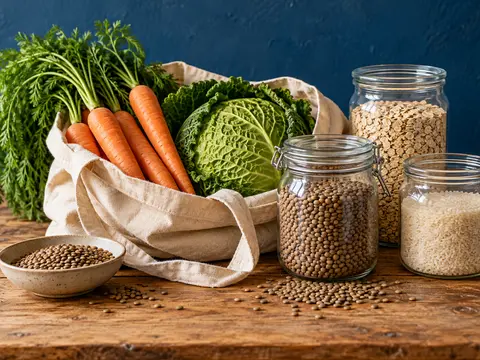
Eating plant-based on a budget
Plan affordable plant-based meals with a realistic US and Canadian grocery example, including package costs, edible yields and convenience tradeoffs.
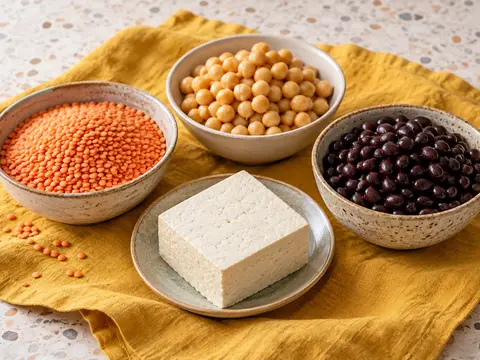
Affordable plant proteins compared
Compare lentils, beans, tofu and other vegan proteins by portion cost and cost per 25 grams of protein, using separate US and Canadian estimates.
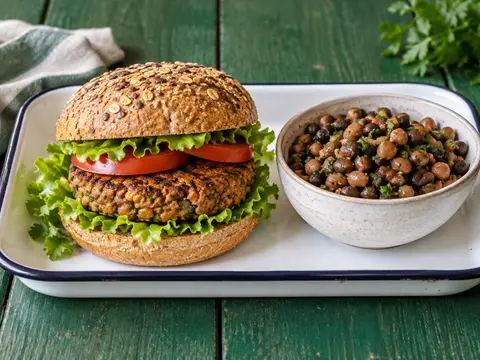
Are plant-based meat alternatives healthy?
Compare meat alternatives by protein, sodium, saturated fat, fortification and cost, with a careful look at product trials and ultra-processed food studies.