What Kaiser Permanente says about plant-based eating
Kaiser Permanente publishes guidance encouraging plant-based meals and discusses their potential health benefits. Its advice is useful member education, but it does not establish that every benefit requires a vegan diet. It also does not determine what your health plan covers or prove financial savings. Read the dietary evidence, your own plan documents and any program's eligibility rules as separate sources of information. [1][2][5]
What Kaiser Permanente recommends
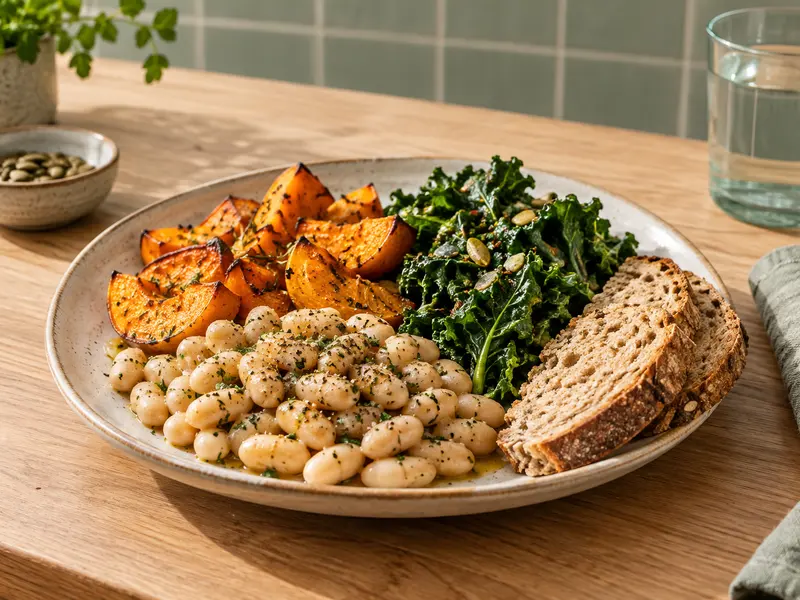
Kaiser Permanente publishes member education encouraging meals built around vegetables, fruit, beans, whole grains, nuts and other plant foods. Its article on plant-based diet benefits describes replacing meat, dairy and eggs and choosing mostly whole, unprocessed foods. It also offers everyday snack ideas, including vegetables with hummus, fruit and whole-grain toast with avocado. Kaiser’s member guidance
The same article discusses blood sugar, cardiovascular health, weight management and digestion. Some statements come from a wellness coach’s experience with patients. Those observations explain the advice Kaiser is publishing; they do not establish how frequently a benefit occurs or whether the diet caused it.
That distinction matters when reading a health organization’s website. Member education can introduce useful choices and point people toward services. A personal report about better energy, sleep or digestion needs a different kind of evidence before it becomes a general treatment claim.
The often-cited Permanente Journal article
A paper called “Nutritional Update for Physicians: Plant-Based Diets” is frequently linked in discussions of Kaiser’s position. Written by clinicians and a dietitian affiliated with Permanente organizations, it reviews earlier research and recommends considering plant-based eating in clinical care. It is a narrative review with an illustrative patient case, rather than a randomized trial of Kaiser members. Tuso and colleagues’ physician update
The case describes improvements after a patient received a dietary prescription alongside medication, exercise advice and regular follow-up. Because several things changed together and there was no comparison group, it cannot isolate the effect of diet or predict another patient’s response.
The review also draws on different dietary patterns, including vegetarian and Mediterranean diets. Its discussion therefore cannot be read as showing that every reported benefit required a vegan diet. Nor does publication in a journal associated with Permanente organizations turn each author’s clinical recommendation into a health-plan coverage rule.
What independently evaluated research adds
Human trials support some of the reasons for recommending plant-rich meals. For example, an eight-week randomized trial in identical twins compared a healthy vegan diet with a healthy omnivorous diet. LDL cholesterol improved more in the vegan group. The study was small, included meal delivery and did not keep calorie intake or weight loss equal. It tested a dietary program’s effects on risk factors, without measuring later heart attacks. Twin diet trial
That result is useful for someone considering a change to improve cholesterol. It does not settle whether vegan eating is the best option for every person, or establish the other benefits mentioned in a general wellness article.
Professional guidance also puts conditions on adequacy. The Academy of Nutrition and Dietetics’ adult position paper supports appropriately planned vegetarian and vegan dietary patterns, with attention to food quality and nutrients. Planning is part of the recommendation. Removing foods without replacing their nutritional contribution is a different intervention. Adult vegetarian dietary position paper
For a fuller discussion of study design and conflicting findings, read plant-based diet benefits. The cholesterol and type 2 diabetes articles examine specific outcomes rather than treating all potential benefits as equally established.
Nutrition advice and coverage answer different questions
A page describing a healthy diet tells you what an organization recommends. Your plan documents tell you which services it covers and under what conditions.
Kaiser explains that an Evidence of Coverage describes benefits, cost sharing and other terms. Depending on the plan, that document may have another name, such as a Certificate of Coverage or Member Handbook. Its guidance directs members to their plan documents or employer for details. Understanding Kaiser health plan documents
If you want help from a registered dietitian, a class or a food-support program, check the particular service. Useful questions include:
- Does my plan cover this service for my situation?
- Do I need a referral, and which providers can I use?
- Is there a charge, a visit limit or an eligibility requirement?
- Does the program provide education, food, clinical monitoring or a combination?
These are questions to resolve with Member Services and the care team. The presence of a plant-based nutrition article does not answer them. It also provides no basis for assuming that another insurer has the same benefits or recommendations.
Food Is Medicine covers more than vegan diets
Kaiser’s Food Is Medicine work includes food-access screening, nutrition counseling, produce support and medically tailored meals. Its Center of Excellence announcement describes services, partnerships and research intended to evaluate health outcomes and costs. That is a broader program than encouraging people to exclude animal foods. Food Is Medicine Center of Excellence
Research in that area may test whether providing groceries and support improves health compared with usual care. A recent Kaiser-affiliated randomized study reported improved blood-glucose control with medically tailored groceries for Medicaid-insured adults with type 2 diabetes. It examined a food-support package, rather than isolating a vegan diet. Its abstract does not establish that adopting vegan eating produces the same result or lowers an individual member’s bills. Medically tailored grocery trial
Health improvement, program cost, health-system spending and a patient’s out-of-pocket costs are separate outcomes. A study needs to measure the relevant one before a financial conclusion follows. These sources do not document an industry-wide financial motive for promoting plant-based eating.
Turn the advice into meals and a nutrient plan
Start with a meal you can repeat comfortably. Oatmeal with fruit and a fortified soy drink can replace a familiar breakfast. A bean sandwich or tofu rice bowl can provide a substantial lunch. Chickpea-spinach curry offers another way to make legumes the centre of dinner.
Convenience can help: frozen vegetables, canned beans and ready-to-eat tofu reduce preparation. Compare labels for sodium and saturated fat. A strict demand to prepare every ingredient from scratch can make a dietary change harder to maintain.
If you exclude all animal foods, establish a reliable vitamin B12 source. NIH guidance identifies fortified foods and supplements as options and explains that unfortified plant foods do not supply dependable B12. Nutritional yeast needs fortification; its name alone does not establish its B12 content. NIH vitamin B12 guidance
Discuss individual needs with the care team if you have a condition requiring dietary restrictions, difficulty eating enough, or medication that may need monitoring as your diet changes. Kaiser’s guidance is a useful starting point for that conversation. The next step is a meal pattern, nutrient plan and available support suited to your circumstances.
Sources and further reading
- Kaiser Permanente. What are the health benefits of a plant-based diet?. Kaiser Permanente member health education; 2023.
- Tuso PJ, Ismail MH, Ha BP, Bartolotto C. Nutritional Update for Physicians: Plant-Based Diets. The Permanente Journal; 2013. DOI: 10.7812/TPP/12-085.
- Landry MJ, Ward CP, Cunanan KM, et al.. Cardiometabolic Effects of Omnivorous vs Vegan Diets in Identical Twins: A Randomized Clinical Trial. JAMA Network Open; 2023. DOI: 10.1001/jamanetworkopen.2023.44457.
- Raj S, Guest NS, Landry MJ, Mangels AR, Pawlak R, Rozga M. Vegetarian Dietary Patterns for Adults: A Position Paper of the Academy of Nutrition and Dietetics. Journal of the Academy of Nutrition and Dietetics; 2025. DOI: 10.1016/j.jand.2025.156227.
- Kaiser Permanente. Understand health plan documents. Kaiser Permanente; n.d.
- Kaiser Permanente. Launching the Food Is Medicine Center of Excellence. Kaiser Permanente; 2024.
- Nau C, Wu JHY, Han B, et al.. Effects of a "Food Is Medicine" Intervention on Glucose Control Among Medicaid-Insured Patients With Type 2 Diabetes: A Randomized Controlled Trial. Circulation; 2026. DOI: 10.1161/CIRCULATIONAHA.125.077982.
- NIH Office of Dietary Supplements. Vitamin B12: Fact Sheet for Consumers. National Institutes of Health; 2023.
Source: https://lentilogical.com/blog/kaiser-permanente-plant-based-diet/
Related guides
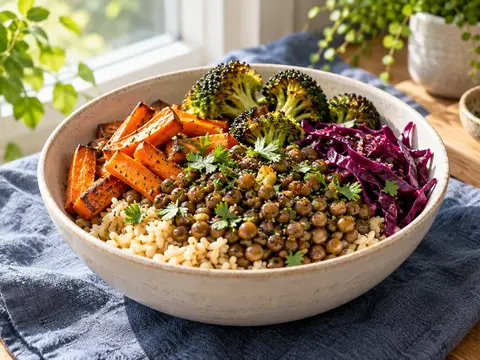
Plant-based diet benefits: what the research can tell us
Explore plant-based diet benefits, what human studies show, how vegan and vegetarian evidence differ, and the nutrients that need planning.
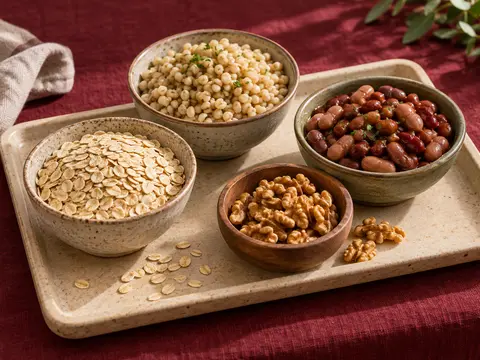
Can a plant-based diet lower LDL cholesterol?
See how much plant-based diets lower LDL in trials, why saturated fat and soluble fibre matter, and how comparison diets affect the results.
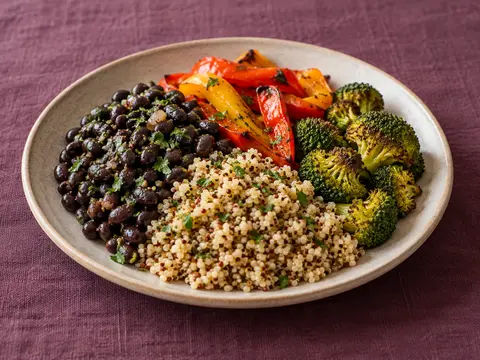
Plant-based diets and type 2 diabetes
Separate diabetes-prevention research from treatment trials, understand HbA1c changes, and plan plant-based meals with medication and nutrition in mind.

Which supplements might a vegan diet need?
Review B12, vitamin D, iodine, calcium, iron, zinc and omega-3 with a practical guide to food gaps, supplement labels and professional advice.