Can a plant-based diet lower LDL cholesterol?
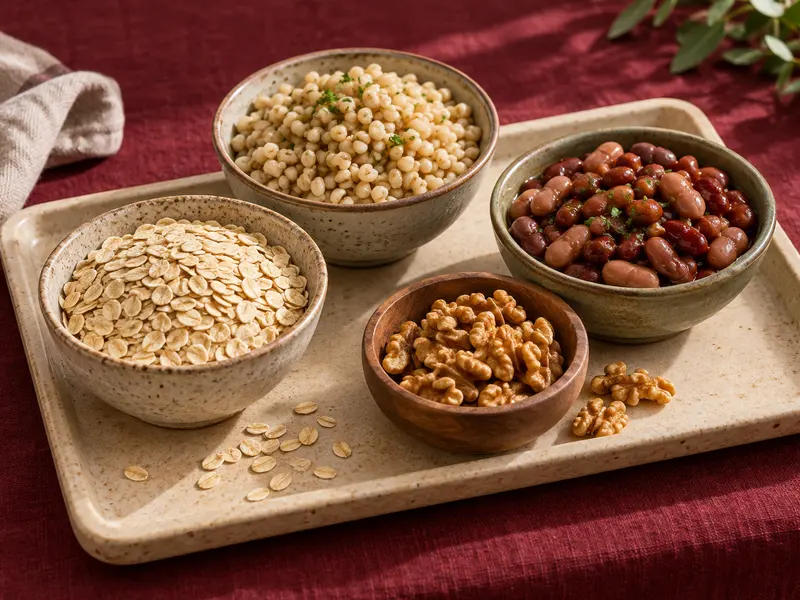
A well-planned plant-based diet can lower LDL cholesterol, especially when it replaces saturated fat with unsaturated fats and adds fibre-rich foods. Randomized trials show modest average reductions, with considerable variation among people and dietary programs. Vegan foods can still be high in saturated fat, and dietary changes may need to work alongside cholesterol-lowering medication. [2][5]
What LDL measures
LDL cholesterol, usually shortened to LDL-C on a laboratory report, measures cholesterol carried in low-density lipoproteins. A large body of genetic, observational and treatment evidence supports a causal role for LDL in atherosclerotic cardiovascular disease. Lowering LDL is therefore a useful treatment goal, although a person’s overall risk also depends on other factors. European Atherosclerosis Society consensus
Your body makes cholesterol. Eating no dietary cholesterol does not guarantee a low blood LDL level, and a vegan label does not tell you how much saturated fat a product contains. The composition of the replacement foods matters.
How much do trials lower LDL?
A meta-analysis brought together 30 randomized trials with 2,372 adults. Across the 27 trials reporting suitable LDL data, vegetarian or vegan diets lowered LDL by an average of 0.30 mmol/L compared with omnivorous diets, approximately 12 mg/dL. The 95% confidence interval was a reduction of 0.19 to 0.40 mmol/L. Koch and colleagues’ meta-analysis
That is a group average across different diets and populations. The trials ranged from ten days to five years, most lasted less than a year, and the results varied substantially. Some diets included dairy or eggs; others were vegan. The pooled estimate cannot promise what a specific person will achieve.
A smaller trial assigned 44 adults in identical twin pairs to healthy vegan or healthy omnivorous diets for eight weeks. The model-estimated difference in LDL change favoured the vegan diet by 13.9 mg/dL, with a 95% confidence interval from 2.4 to 25.3 mg/dL lower. Meals were delivered for the first four weeks, and the vegan group also lost more weight. Identical-twin trial
Random assignment makes these useful tests of the assigned dietary programs. It does not show which single feature caused the result. Removing animal foods, reducing saturated fat, increasing fibre, eating fewer calories and losing weight may occur together.
The comparison diet changes the answer
A usual-diet control group may make few changes. An active comparison group might also reduce saturated fat, increase vegetables and receive dietary counseling. A plant-based intervention has a harder comparison in the second case.
A review of vegetarian trials in people with cardiovascular disease or elevated risk found that LDL improvements were clearer against usual diets than against active therapeutic diets. Comparisons against active controls did not establish an overall LDL advantage. This does not mean that neither diet worked; it means the difference between the assigned programs was uncertain. Wang and colleagues’ review
Baseline LDL, medication, adherence and the foods people previously ate also affect the result. Someone who already eats little saturated fat may have less room for improvement through that particular change. People with genetically high cholesterol may still require medication even with a carefully planned diet.
Replace saturated fat with unsaturated fats
Saturated fat can raise LDL. Common sources include butter, cheese and fatty meats, but also coconut, palm and palm-kernel oils. A coconut-oil-based vegan cheese can therefore retain a feature of dairy cheese that matters for LDL. American Heart Association saturated-fat guidance
Useful replacements include beans, tofu, nuts, seeds and foods prepared with unsaturated oils such as canola or olive oil. The change is a substitution: adding nuts while keeping everything else the same is different from using nuts or beans to replace a food high in saturated fat.
Compare the saturated-fat line on labels for plant-based cheeses, burgers, desserts and spreads. Serving sizes need to match before the numbers are comparable. The words dairy-free, organic or cholesterol-free do not substitute for that check.
A very low-fat diet is not the only way to lower saturated fat. Nuts and seeds contain fat, yet can fit a cholesterol-lowering meal pattern. Choose the type and amount of fat in the context of the whole diet, your energy needs and foods you can maintain.
Include foods with soluble fibre
Some soluble fibres form a viscous gel in the intestine and can lower LDL partly by increasing bile-acid excretion. Oats, barley, beans and some fruits provide soluble fibre along with other nutrients.
A large review of randomized trials found that soluble-fibre supplements lowered LDL on average. The studies varied greatly and showed evidence of publication bias, so the size of the effect needs caution. These were supplement studies: their average result should not be presented as the measured effect of a bowl of oatmeal or a serving of beans. Soluble-fibre trial review
Use fibre-rich foods regularly rather than expecting one ingredient to compensate for the rest of the diet. Oats at breakfast and beans or lentils in a main meal are workable options. If your intake is currently low, increase it gradually to make digestive symptoms easier to manage.
Psyllium is a concentrated fibre source, but supplements have their own instructions, tolerance issues and possible interactions with medicines. Ask a pharmacist or clinician about suitability if you are considering one. Ordinary meal planning does not require buying a cholesterol-lowering powder.
What the Portfolio diet adds
The Portfolio diet combines several foods or ingredients with LDL-lowering evidence: nuts, soy protein, viscous fibre and added plant sterols. It is a more specific intervention than simply avoiding meat.
In a six-month Canadian trial, 351 people with high cholesterol were randomized to low-saturated-fat dietary advice or Portfolio advice at two levels of counseling intensity. LDL fell by about 13% to 14% in the Portfolio groups, compared with about 3% in the control group. These are changes from each group’s baseline, rather than a 13-percentage-point advantage over the control. Portfolio dietary-advice trial
Adherence was incomplete and around one in five participants dropped out. The study received public and food-industry funding. It supports combining useful dietary changes, while leaving uncertainty about how closely its result will transfer to a particular household. The intervention also included sterol-enriched products, so eating oats and nuts alone does not reproduce the tested program.
Build meals around useful replacements
| Familiar meal | A plant-based version to try | What to check |
|---|---|---|
| Creamy pasta | White-bean sauce with vegetables and pasta | Use an unsaturated oil if needed; compare saturated fat in packaged sauces. |
| A meat sandwich | Hummus or tofu with whole-grain bread and vegetables | Choose enough filling for a satisfying meal; compare sodium in prepared products. |
| A pastry breakfast | Oats with fruit, nuts and a fortified soy drink | Check fortification and added sugars on the drink label. |
Our peanut banana overnight oats are one breakfast idea using oats. It has not been tested as a cholesterol treatment. For the nutritional planning that goes with vegan eating, see which supplements might a vegan diet need?
Check the response alongside your care plan
Dietary trials establish that a planned change can lower LDL; they cannot guarantee a personal target or replace an assessment of cardiovascular risk. LDL can remain elevated because of genetics, medical conditions or a combination of influences.
Arrange follow-up with your clinician to assess the change and discuss the laboratory result in context. Continue prescribed medication unless the prescribing clinician changes it. The strongest practical plan combines meals you can keep eating, adequate nutrition and treatment appropriate to your risk.
Sources and further reading
- Ference BA, Ginsberg HN, Graham I, et al.. Low-density lipoproteins cause atherosclerotic cardiovascular disease. 1. Evidence from genetic, epidemiologic, and clinical studies. A consensus statement from the European Atherosclerosis Society Consensus Panel. European Heart Journal; 2017. DOI: 10.1093/eurheartj/ehx144.
- Koch CA, Kjeldsen EW, Frikke-Schmidt R. Vegetarian or vegan diets and blood lipids: a meta-analysis of randomized trials. European Heart Journal; 2023. DOI: 10.1093/eurheartj/ehad211.
- Landry MJ, Ward CP, Cunanan KM, et al.. Cardiometabolic Effects of Omnivorous vs Vegan Diets in Identical Twins: A Randomized Clinical Trial. JAMA Network Open; 2023. DOI: 10.1001/jamanetworkopen.2023.44457.
- Wang T, Kroeger CM, Cassidy S, et al.. Vegetarian Dietary Patterns and Cardiometabolic Risk in People With or at High Risk of Cardiovascular Disease: A Systematic Review and Meta-analysis. JAMA Network Open; 2023. DOI: 10.1001/jamanetworkopen.2023.25658.
- American Heart Association. Saturated Fats. American Heart Association; 2024.
- Ghavami A, Ziaei R, Talebi S, et al.. Soluble Fiber Supplementation and Serum Lipid Profile: A Systematic Review and Dose-Response Meta-Analysis of Randomized Controlled Trials. Advances in Nutrition; 2023. DOI: 10.1016/j.advnut.2023.01.005.
- Jenkins DJA, Jones PJH, Lamarche B, et al.. Effect of a Dietary Portfolio of Cholesterol-Lowering Foods Given at 2 Levels of Intensity of Dietary Advice on Serum Lipids in Hyperlipidemia: A Randomized Controlled Trial. JAMA; 2011. DOI: 10.1001/jama.2011.1202.
Source: https://lentilogical.com/blog/plant-based-diet-cholesterol/
Related guides
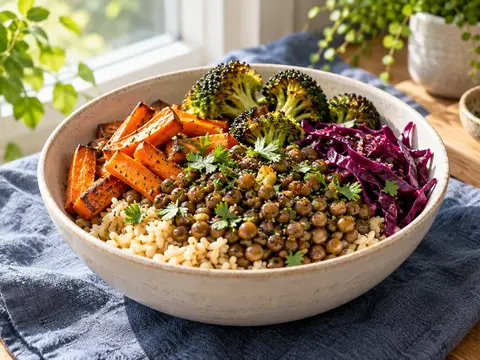
Plant-based diet benefits: what the research can tell us
Explore plant-based diet benefits, what human studies show, how vegan and vegetarian evidence differ, and the nutrients that need planning.
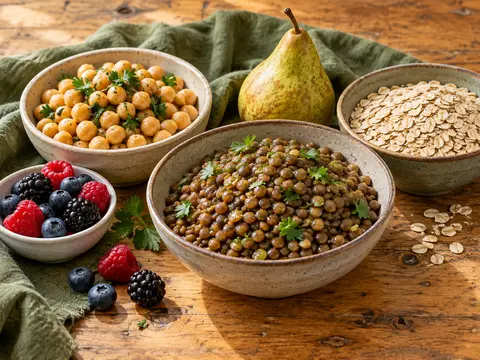
Fibre, beans and gut health
Learn how plant foods and fibre affect digestion, what microbiome studies can tell us, and how to add beans and whole grains at a comfortable pace.
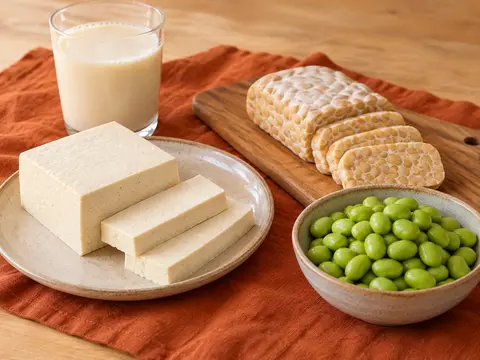
Soy foods and health: what human studies show
What tofu, tempeh and soy milk contribute to a vegan diet, with human evidence on cholesterol, hormones and thyroid concerns, plus supplement cautions.
Are plant-based meat alternatives healthy?
Compare meat alternatives by protein, sodium, saturated fat, fortification and cost, with a careful look at product trials and ultra-processed food studies.