Plant-based diets and type 2 diabetes
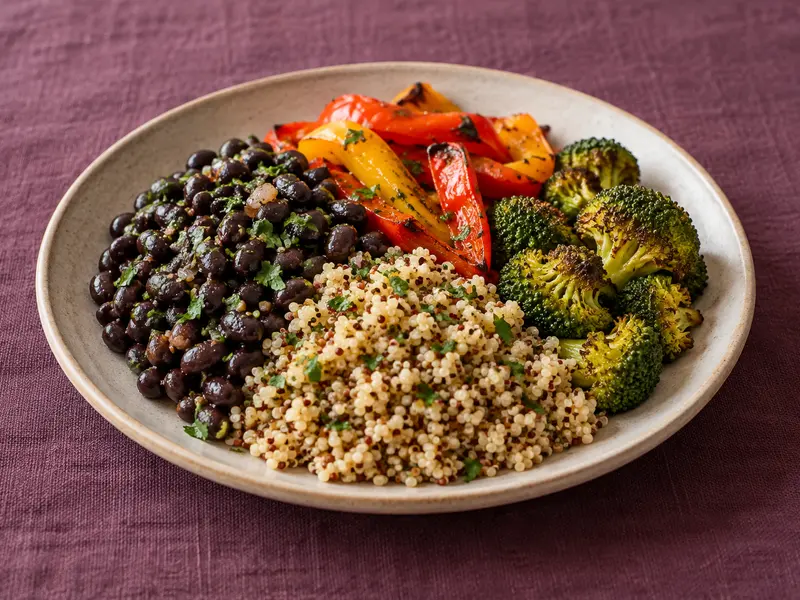
Plant-based diets are an option for managing type 2 diabetes. Trials suggest a modest average improvement in HbA1c, often alongside weight change and nutrition counseling, but some studies find no clear advantage over other diets. Prevention evidence is largely observational. People taking insulin or medicines that can cause low glucose should coordinate major dietary changes with their care team. [3][1][8]
Prevention and treatment are different questions
Research on preventing type 2 diabetes asks whether people without diabetes later develop it. Treatment research asks what happens to blood glucose and other outcomes in people who already have diabetes. Findings from one group cannot be substituted for the other.
In three large US cohorts, dietary patterns emphasizing whole grains, fruit, vegetables, nuts and legumes were associated with lower type 2 diabetes incidence. A pattern emphasizing refined grains, sweetened drinks and sweets was associated with higher incidence. These were scores across a range of diets, and most participants were not vegan. Satija and colleagues’ prevention study
Participants chose their foods, so residual differences in weight, exercise, health awareness and other circumstances can influence the result. Food questionnaires also introduce measurement error. The findings support attention to food quality; they do not prove that adopting a vegan diet prevents diabetes.
For someone who already has type 2 diabetes, randomized trials provide more direct evidence about the effect of an assigned dietary program. Their results are encouraging, but usually modest and dependent on the comparison.
Read HbA1c changes in percentage points
HbA1c, also called A1C, is a blood test reflecting average blood glucose over roughly the preceding three months. It does not show every short-lived rise or low reading. Targets differ according to health, diabetes history and treatment circumstances. NIDDK explanation of A1C
Diet trials often report the difference in HbA1c change between groups. A reduction of 0.4 percentage points would, as an illustration, move 8.0% to 7.6%. It is not a 40% reduction in blood sugar and does not mean that everyone starting at 8.0% will reach that result.
Read whether a result includes all randomized participants, only those who completed the trial, or only those whose medicines stayed unchanged. Those analyses can answer different questions.
What the treatment trials find
A systematic review included seven randomized trials of vegetarian or vegan patterns in adults with type 2 diabetes. Its pooled HbA1c analysis used five studies and found an average advantage of 0.40 percentage points over nonvegetarian comparison diets. The 95% confidence interval was 0.21 to 0.59 points lower. The authors rated the evidence moderate certainty, with small samples limiting confidence. Guest and colleagues’ treatment review
Most interventions were vegan, often low fat, and commonly included nutrition counseling. The review also found a reduction in body mass index. It did not establish improvements in every outcome: fasting glucose, fasting insulin and LDL cholesterol did not clearly improve in its pooled comparisons.
One Korean trial compared a brown-rice-based vegan pattern with a conventional diabetes diet for twelve weeks. Both groups’ HbA1c improved, with a larger reduction in the vegan group. The trial randomized 106 people, of whom 93 completed follow-up. Adherence was lower in the vegan group, and the study was too short to establish durability. Korean randomized trial
Longer results can be less clear. In a 74-week trial of 99 adults, the overall analysis found no clear HbA1c difference between a low-fat vegan diet and a conventional diabetes diet. An analysis using values before medication adjustments favoured the vegan diet. Reporting only that second analysis would hide the uncertainty created by medication changes and longer-term adherence. Barnard and colleagues’ 74-week trial
New research also includes inconclusive findings. A recent trial of an online, predominantly plant-based program did not establish an HbA1c improvement over usual diet, although some secondary measures improved. It tested a different program from the stricter vegan interventions. Online plant-based intervention trial
Taken together, these studies support vegetarian and vegan patterns as options in diabetes nutrition care. They do not establish that one pattern works best for everyone or that diet alone replaces treatment.
Weight, food quality and support often change together
A vegan intervention may reduce energy intake while increasing fibre and reducing saturated fat. Weight loss can improve glucose management, and several trials reported weight changes alongside HbA1c changes. Those simultaneous changes make it difficult to attribute the result specifically to excluding animal foods.
Counseling matters too. Regular meetings, meal guidance and follow-up give participants support that a diet label alone cannot provide. A study with those services estimates the effect of the program, not simply the effect of buying foods marked vegan.
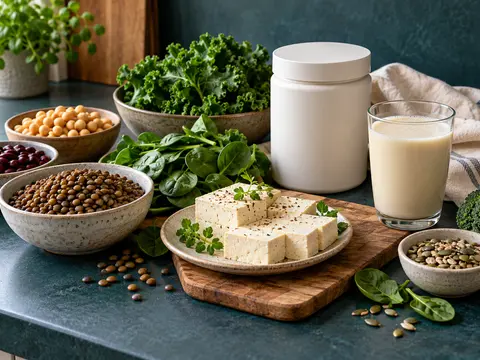
The practical lesson is to plan the replacement. Beans, tofu, lentils and whole grains provide a different meal from refined bread and sweetened drinks, even though both combinations can exclude animal foods. A plan also needs enough energy, protein and essential nutrients; see our vegan supplements guide for nutrients that need attention.
Carbohydrate still needs a place in the plan
Many nutritious plant foods contain carbohydrate, including beans, fruit, grains and starchy vegetables. They can fit diabetes meal plans, but portion size and the whole meal affect the glucose response.
NIDDK describes carbohydrate counting and the plate method as two possible planning tools. A vegan version can use nonstarchy vegetables, a suitable portion of a high-fibre carbohydrate food, and tofu or another substantial plant protein. Beans supply both carbohydrate and protein, so account for both roles when planning a meal. NIDDK diabetes meal-planning guidance
For example, a tofu and vegetable bowl can include brown rice in a portion suited to the existing care plan. A lentil stew can be paired with vegetables rather than automatically adding a large portion of bread and rice as well. These are adaptable examples, not prescribed portions or guarantees of a particular glucose reading.
Try tofu-spinach-lentil dal or a cucumber, white-bean and tomato salad as meal ideas. A recipe’s plant-based status does not make it suitable for every person or every serving size.
Coordinate changes with medication and monitoring
Insulin and medicines such as sulfonylureas can cause low blood glucose. Eating less carbohydrate than expected, delaying meals or increasing activity can increase that risk. Discuss a major dietary change with the prescribing team before starting, especially if the change will substantially reduce food intake. NIDDK hypoglycaemia guidance
Ask how to monitor during the transition, which readings should prompt contact and how to recognize and treat low glucose under your existing plan. Medication changes belong with the clinician responsible for them. A lower HbA1c is not automatically a better outcome if it comes with frequent lows.
Continue the other parts of diabetes care, including blood pressure, cholesterol, eye and kidney follow-up. The dietary trials discussed here mainly measured risk factors; they did not establish that a few months of vegan eating prevents all diabetes complications.
Improvement and remission have different meanings
A lower HbA1c or a smaller medication dose does not by itself establish remission. An international consensus report recommends a defined period of glucose levels below the diabetes threshold without usual glucose-lowering medication, assessed under clinical supervision. Remission still requires monitoring because glucose can rise again and complication risk can remain. International remission consensus
Do not stop beneficial treatment to qualify for a label. The relevant outcome is a safe, sustainable improvement in health. A plant-based meal pattern can contribute to that goal when it fits the person’s preferences, nutrition needs and care plan.
Sources and further reading
- Satija A, Bhupathiraju SN, Rimm EB, et al.. Plant-Based Dietary Patterns and Incidence of Type 2 Diabetes in US Men and Women: Results from Three Prospective Cohort Studies. PLOS Medicine; 2016. DOI: 10.1371/journal.pmed.1002039.
- National Institute of Diabetes and Digestive and Kidney Diseases. The A1C Test & Diabetes. National Institutes of Health; n.d.
- Guest NS, Raj S, Landry MJ, et al.. Vegetarian and Vegan Dietary Patterns to Treat Adult Type 2 Diabetes: A Systematic Review and Meta-Analysis of Randomized Controlled Trials. Advances in Nutrition; 2024. DOI: 10.1016/j.advnut.2024.100294.
- Lee YM, Kim SA, Lee IK, et al.. Effect of a Brown Rice Based Vegan Diet and Conventional Diabetic Diet on Glycemic Control of Patients with Type 2 Diabetes: A 12-Week Randomized Clinical Trial. PLOS One; 2016. DOI: 10.1371/journal.pone.0155918.
- Barnard ND, Cohen J, Jenkins DJA, et al.. A low-fat vegan diet and a conventional diabetes diet in the treatment of type 2 diabetes: a randomized, controlled, 74-wk clinical trial. The American Journal of Clinical Nutrition; 2009. DOI: 10.3945/ajcn.2009.26736H.
- Hoes LLF, Geleijnse JM, Bemelmans RHH, et al.. An online, predominantly plant-based, dietary intervention for improving cardiovascular risk: A randomized controlled trial in people with type 2 diabetes. American Heart Journal; 2026. DOI: 10.1016/j.ahj.2026.107436.
- National Institute of Diabetes and Digestive and Kidney Diseases. Healthy Living with Diabetes. National Institutes of Health; n.d.
- National Institute of Diabetes and Digestive and Kidney Diseases. Low Blood Glucose (Hypoglycemia). National Institutes of Health; n.d.
- Riddle MC, Cefalu WT, Evans PH, et al.. Consensus Report: Definition and Interpretation of Remission in Type 2 Diabetes. Diabetes Care; 2021. DOI: 10.2337/dci21-0034.
Source: https://lentilogical.com/blog/plant-based-diet-type-2-diabetes/
Related guides
Plant-based diet benefits: what the research can tell us
Explore plant-based diet benefits, what human studies show, how vegan and vegetarian evidence differ, and the nutrients that need planning.
Can a plant-based diet lower LDL cholesterol?
See how much plant-based diets lower LDL in trials, why saturated fat and soluble fibre matter, and how comparison diets affect the results.
Fibre, beans and gut health
Learn how plant foods and fibre affect digestion, what microbiome studies can tell us, and how to add beans and whole grains at a comfortable pace.
Which supplements might a vegan diet need?
Review B12, vitamin D, iodine, calcium, iron, zinc and omega-3 with a practical guide to food gaps, supplement labels and professional advice.