Plant-based eating and blood pressure
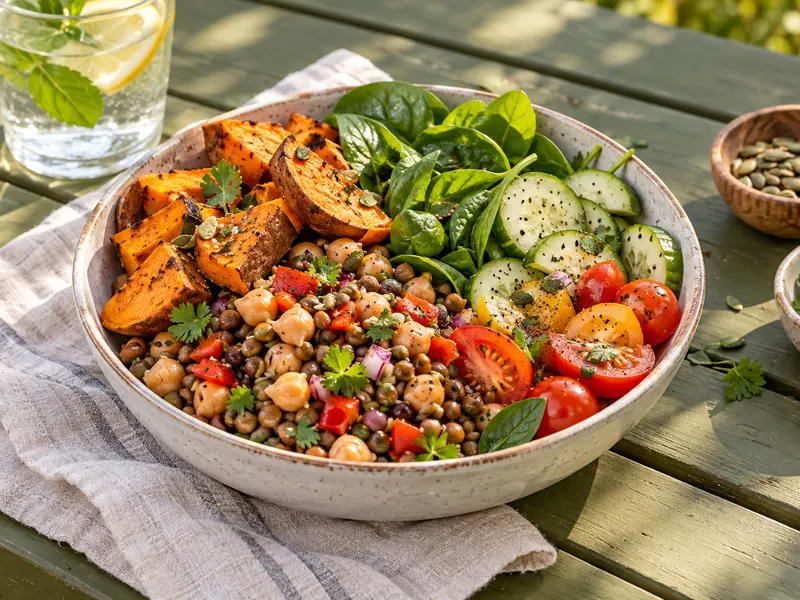
Plant-rich meals can help manage blood pressure, particularly when they reduce sodium and follow a balanced eating pattern. The evidence is clearer for DASH and some vegetarian patterns than for vegan diets alone. Vegan meals can still be salty, and people with kidney disease or certain medicines need advice before increasing potassium or using potassium-based salt substitutes. [2][1][5]
The whole eating pattern matters
A meal pattern rich in vegetables, fruit, beans, nuts and whole grains can support blood-pressure management. Sodium intake and the balance of foods matter alongside any decision to avoid animal products.
Blood pressure has two numbers. Systolic pressure is the upper number, measured as the heart contracts; diastolic pressure is the lower number, between beats. Diet studies may report changes in one or both, usually in millimetres of mercury, or mm Hg. A change in blood pressure is a risk-factor outcome. A short dietary trial usually cannot establish how many future strokes it will prevent.
The National Heart, Lung, and Blood Institute’s DASH eating plan emphasizes plant foods, lower saturated fat and lower sodium. It also includes dairy, fish and poultry in its standard form. Its evidence should therefore be identified as DASH evidence rather than described as a trial of vegan eating. NHLBI DASH guidance
What trials of different diets show
A review of 41 controlled trials involving 8,416 people compared several plant-rich patterns with control diets. The evidence differed by pattern. DASH and lacto-ovo vegetarian diets produced clearer average reductions than the vegan diets studied. The vegan result was imprecise and did not establish a blood-pressure reduction. Gibbs and colleagues’ review
| Pattern in the review | Average systolic difference versus control | How to interpret it |
|---|---|---|
| DASH | About 5.5 mm Hg lower; 95% confidence interval 3.1 to 8.0 lower | Clearer evidence for the tested pattern, which allowed animal foods. |
| Lacto-ovo vegetarian | About 5.5 mm Hg lower; interval 3.3 to 7.6 lower | Includes dairy and eggs; cannot be relabelled vegan evidence. |
| Vegan | About 1.3 mm Hg lower; interval 3.9 lower to 1.3 higher | Low-certainty evidence; no clear average difference established. |
These were separate sets of trials, rather than a single direct comparison among all three diets. Differences in participants, sodium intake, study length and control diets limit any attempt to rank the patterns.
A later review in people with cardiovascular disease or elevated cardiovascular risk also found no clear average systolic benefit from vegetarian interventions. Some people improved, but the combined finding did not establish superiority over the comparison diets. Wang and colleagues’ review
This supports a measured claim: plant-based meals can be part of a useful treatment plan, while excluding animal foods alone is an unreliable way to predict the size of the blood-pressure change.
Sodium can change the result
Plant-based meals can contain considerable sodium. Bread, restaurant meals, instant noodles, sauces, soups, pickles and meat alternatives all deserve a label check. A meal can have plenty of vegetables and still contain a salty broth or dressing.
A controlled crossover study illustrates the effect of a large sodium change. Among 213 middle-aged and older adults who completed both diet periods, participants followed higher- and lower-sodium diets for one week each. At the end of the first week, systolic pressure averaged 8 mm Hg lower in the lower-sodium group, with a 95% confidence interval of 4 to 11 mm Hg lower. The low-sodium meals were supplied, and diet order was allocated by weekday at each site. Gupta and colleagues’ sodium trial
The study used a large contrast between diets, and results varied by person. It does not mean that omitting a pinch of salt will reliably lower anyone’s pressure by eight points. It does show why a blood-pressure claim about a dietary program should account for sodium.
Compare sodium for the portion you will actually eat. Two servings of a soup or sauce contribute twice the listed amount. No-salt-added beans and lower-sodium broth can make a difference to a recipe without requiring you to give up convenient foods. Lemon juice, vinegar, herbs and spices can supply flavour while you adjust how much salt or sauce you use.
Adapt plant-rich meals thoughtfully
A vegan meal pattern can follow several DASH principles: include vegetables and fruit, choose whole grains, use beans or soy foods for protein, and favour unsaturated fats. Replacing dairy requires attention to nutrients such as calcium and protein. A fortified soy drink and an unfortified coconut drink do not provide the same nutritional replacement.
These adaptations are reasonable meal-planning choices. They should not be described as having exactly the blood-pressure effect measured in the original DASH trials. Nor is there a demonstrated need to buy a special juice, powder or supplement to make a plant-rich meal worthwhile.
For dinner, try a lentil-parsley salad with an appropriately sized starchy side, or rosemary potato and white-bean soup made with lower-sodium ingredients. The recipes are meal suggestions, without measured blood-pressure effects.
Choose changes that fit your budget and schedule. Keeping plain frozen vegetables and beans available may make regular meals easier than relying on a more restrictive plan that you cannot maintain.
Potassium needs an individual check in some conditions
Beans, potatoes, fruit and vegetables can contribute potassium. DASH guidance includes potassium-rich foods, but deliberately increasing potassium is not suitable for everyone.
Kidney disease can affect the body’s ability to keep blood potassium in a safe range. Some medicines also raise potassium. People in those situations may need an individualized plan for portions, preparation and food choices. That does not require avoiding every plant food; it requires matching the diet to laboratory results and treatment. NIDDK kidney-disease nutrition guidance
Check before using a potassium-based salt substitute if you have kidney disease, high potassium or medicines that affect potassium balance. The same applies to potassium supplements. A product labelled low-sodium may use potassium chloride, so the ingredients list can matter as well as the sodium number.
Measure progress and keep treatment coordinated
Use repeat readings to assess a response. A single number can change with activity, stress, caffeine, measurement technique and the time of day.
The American Heart Association recommends a validated automatic upper-arm monitor with a correctly fitting cuff. Sit quietly before measuring, support the arm at heart level and record repeated readings as directed by your care team. Bring the monitor to an appointment so its use and readings can be checked. Home blood-pressure monitoring guidance
Discuss a substantial dietary change if you take blood-pressure medication, particularly if readings fall or you develop dizziness. Continue treatment unless your prescribing clinician changes it. Home monitoring helps assess treatment; it does not replace appointments.
Diet is one influence on blood pressure, alongside genetics, activity, sleep, alcohol, medical conditions and medicines. Persistently elevated pressure needs care even when a person’s meals are nutritious. A useful dietary plan improves what can be changed while keeping monitoring and treatment in place.
Sources and further reading
- National Heart, Lung, and Blood Institute. DASH Eating Plan. National Institutes of Health; 2026.
- Gibbs J, Gaskin E, Ji C, Miller MA, Cappuccio FP. The effect of plant-based dietary patterns on blood pressure: a systematic review and meta-analysis of controlled intervention trials. Journal of Hypertension; 2021. DOI: 10.1097/HJH.0000000000002604.
- Wang T, Kroeger CM, Cassidy S, et al.. Vegetarian Dietary Patterns and Cardiometabolic Risk in People With or at High Risk of Cardiovascular Disease: A Systematic Review and Meta-analysis. JAMA Network Open; 2023. DOI: 10.1001/jamanetworkopen.2023.25658.
- Gupta DK, Lewis CE, Varady KA, et al.. Effect of Dietary Sodium on Blood Pressure: A Crossover Trial. JAMA; 2023. DOI: 10.1001/jama.2023.23651.
- National Institute of Diabetes and Digestive and Kidney Diseases. Healthy Eating for Adults with Chronic Kidney Disease. National Institutes of Health; n.d.
- American Heart Association. Home Blood Pressure Monitoring. American Heart Association; n.d.
Source: https://lentilogical.com/blog/plant-based-diet-blood-pressure/
Related guides
Plant-based diet benefits: what the research can tell us
Explore plant-based diet benefits, what human studies show, how vegan and vegetarian evidence differ, and the nutrients that need planning.
Can a plant-based diet lower LDL cholesterol?
See how much plant-based diets lower LDL in trials, why saturated fat and soluble fibre matter, and how comparison diets affect the results.
Plant-based diets and type 2 diabetes
Separate diabetes-prevention research from treatment trials, understand HbA1c changes, and plan plant-based meals with medication and nutrition in mind.
Are plant-based meat alternatives healthy?
Compare meat alternatives by protein, sodium, saturated fat, fortification and cost, with a careful look at product trials and ultra-processed food studies.